

The Great Crime Decline
Homicides just hit their lowest level since 1900. The decline over the past 3 years is the fastest 3-year decline since records began. The federal stimulus during Covid may help explain why.


Over the last three years, the United States has experienced the sharpest drop in the homicide rate in recorded history. The turnaround is particularly striking because it followed the fastest spike in homicides on record—a surge that coincided with the disruptions of Covid-19 starting in 2020. Crime trends usually take years, even decades, to unfold. These were abrupt and dramatic. Why?
While some of the decline is surely related to the “return to normal” as schools reopened and society came back to its normal rhythms, one explanation for this mysterious great crime decline hasn’t received enough attention: the dramatic fiscal support the federal government provided both state and local governments and individuals during Covid.
In 2020 and 2021, Congress passed a series of massive funding initiatives, culminating in the American Rescue Plan (ARP), which injected federal funds into households and every state and local government across the country. The plan’s principal goal was to cushion the economy from the shock of Covid and its follow-on effects. But many local governments chose to allocate these funds to public safety initiatives—with roughly $17 billion going to public safety and violence prevention efforts and substantially more going to social services. This infusion may help explain part of the precipitous drop in crime. *I worked on the implementation of the ARP in the White House and helped lead our work to help local governments use these funds to address violent crime.
This funding came alongside other efforts that may have contributed to the decline. The federal government made a focused investment in community violence intervention through the Bipartisan Safer Communities Act and states and cities took a more coordinated approach to violence prevention (with 15 new state offices of violence prevention over 100 local offices of violence prevention and cities adopting improved law enforcement tools to investigate shootings).
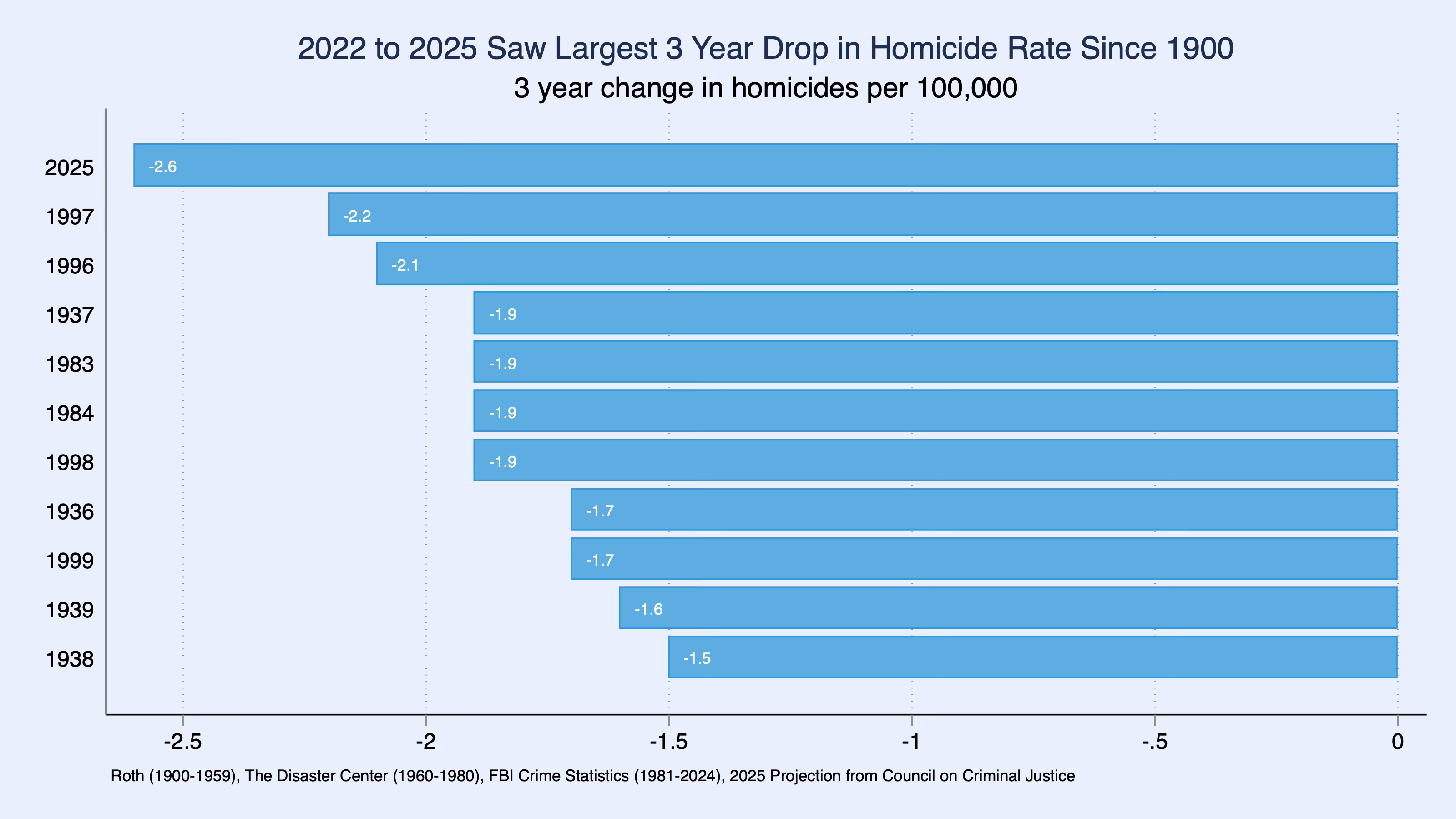
Homicide rates have risen and fallen before, with major declines in the 1930s and the 1990s. But while previous shifts generally unfolded over longer periods, the Covid era was much faster, both in its spike and in the speed of its decline.
Analyzing this drop has implications for policymakers designing the fiscal response to the next economic shock, as well as seeking to curb crime going forward. With the benefit of five years of Covid and post-Covid data, it’s worth taking stock of where we are and potential explanations for how we got there.
Crime rise in 2020 came amid the chaos of the pandemic
The homicide rate surged by 31% in 2020, the largest one-year increase on record and more than twice as large an increase than any seen in the last 100 years.
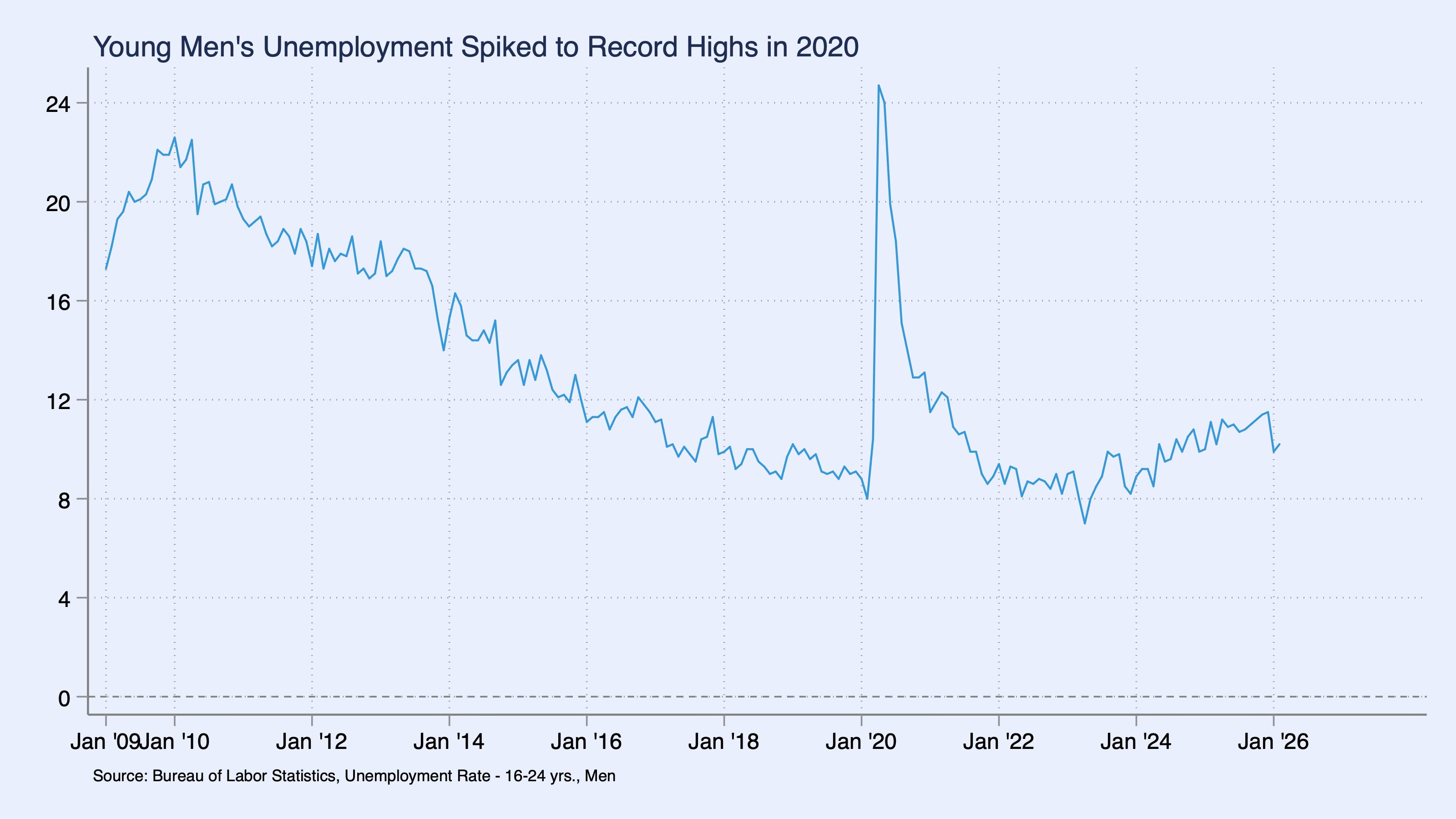
Many experts think crime spiked so dramatically starting in 2020 because Covid dramatically disrupted the lives of the young people involved with the most violent crime. Homicide perpetrators are mostly teenage boys and men under 30, Brookings’ Rohit Acharya and Rhett Morris report. People in prison are more likely not to have finished high school and are more likely to have been unemployed at the time their crime was committed.
These groups were hugely impacted by the pandemic. As Acharya and Morris found, “large numbers of teen boys in neighborhoods with concentrated poverty were pushed out of school in March of 2020” and “large numbers of young men in neighborhoods with concentrated poverty also lost their jobs in March and early April of 2020.” Julia P Schleimer, et. al. found that “increases in unemployment may have contributed to a rise in firearm violence and homicide during the pandemic,” indicating that “the acute worsening of economic conditions may also increase violence risk.”
How much did crime rates drop starting in 2023?
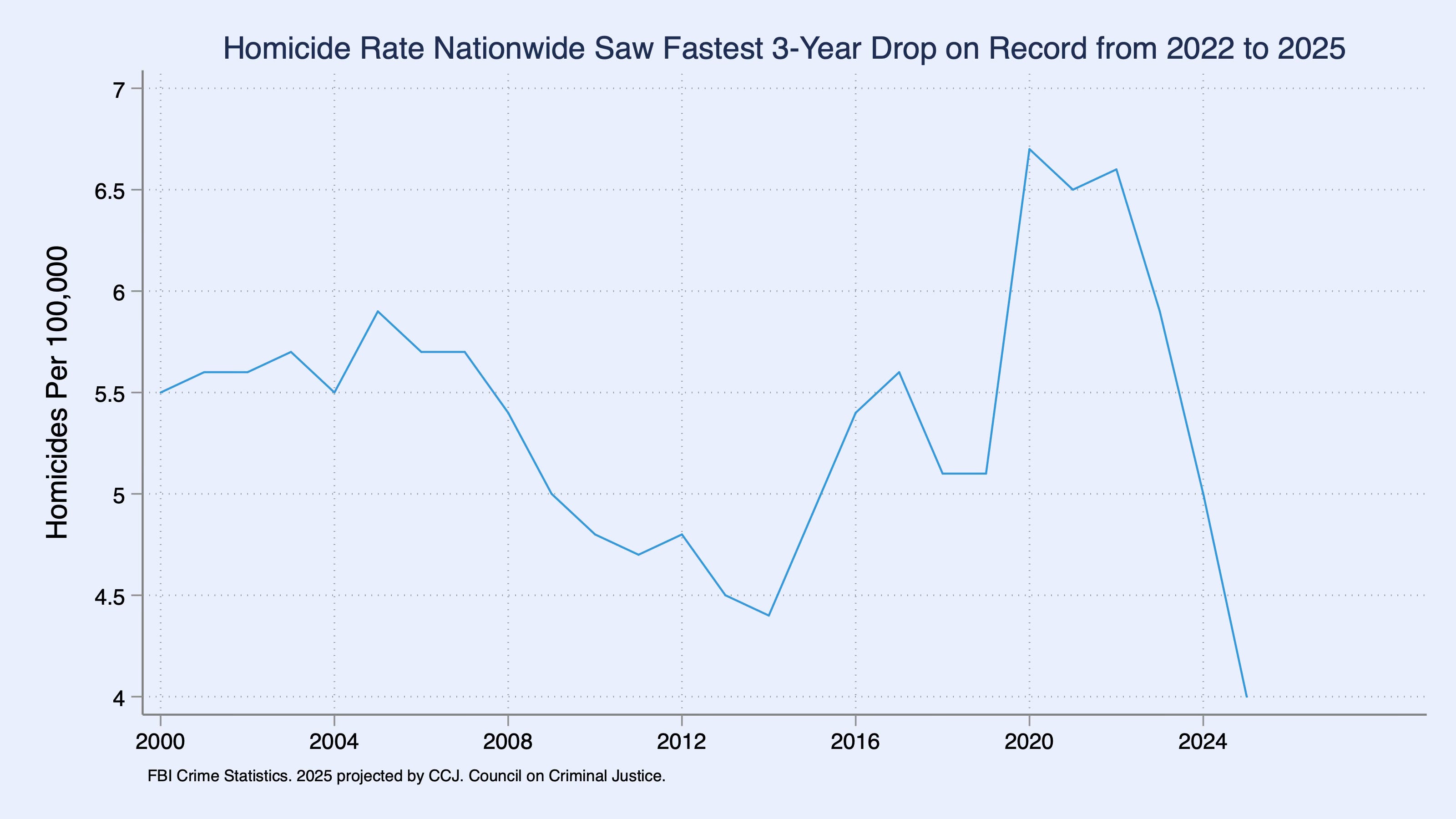
Homicide rates fell from 6.6 per 100,000 to 5.9 per 100,000 from 2022 to 2023 (an 11% drop), fell further to 5 per 100,000 in 2024 (a 15% year over year drop), and fell by another 20% to 4 per 100,000 in 2025, according to Council on Criminal Justice projections. Homicide rates are now more than 20% below where they were before the pandemic—at around 4 per 100,000 compared to 5.1 per 100,000 in 2019. If the Council on Criminal Justice projections for 2025 hold true, it will be the lowest year of homicides on record going back to 1900.
This data shows that from 2022 to 2025, the U.S. likely saw the sharpest three-year drop in the homicide rate since records began in 1900.
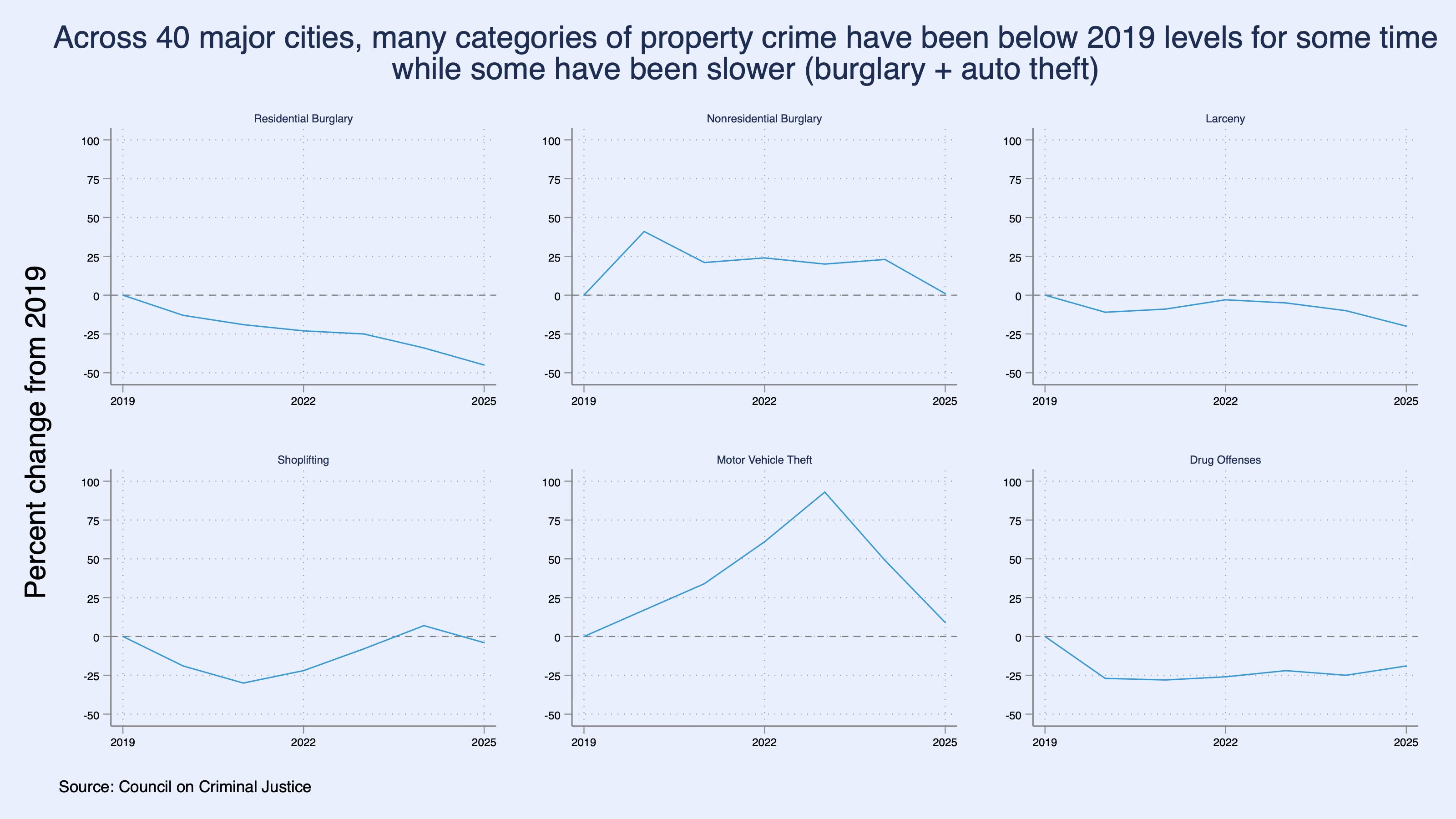
The drop in crime extends across high crime cities and low crime cities alike, with the most significant decline in homicides in communities that experience a lot of them. (See the right pane in the Council on Criminal Justice chart below). Overall property crime has declined alongside violent crime and has reached lower levels than pre-pandemic.
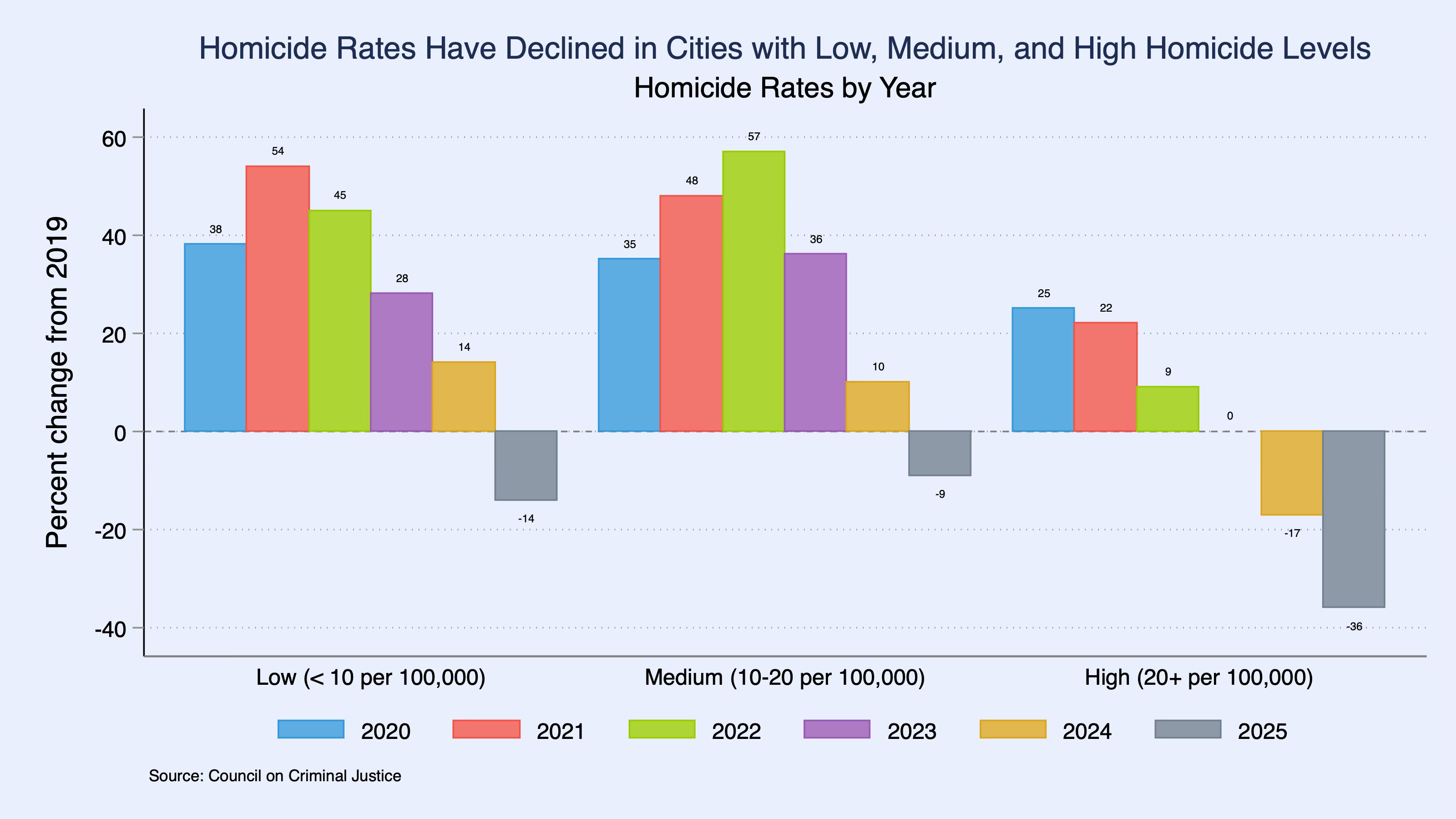
Certain categories of crime, particularly motor vehicle theft and organized retail theft, have been more stubborn. Motor vehicle theft was significantly above its 2019 rates as late as 2024, but finally declined to rates near pre-pandemic lows in 2025, according to Council on Criminal Justice data.
Why did crime drop so precipitously? Federal investment may have helped
Social scientists and crime experts have long struggled to identify what causes nationwide increases or decreases in crime. Covid is no exception.
Past crime waves have taken significantly longer to reverse than this time. Studies on how violent crime leads to more violent crime makes the decrease over the past three years all the more surprising. A 2017 study found that 63% of all gunshot violence episodes in Chicago over an eight-year period occurred in “cascades” through social networks, causing rippling violence across social networks for years. Other experts, such as Gary Slutkin, have argued similarly that violence spreads through communities in patterns that look similar to infectious disease. Experts believe some of these dynamics explain part of why it took so long to break the 1960s to 1990 violent crime wave.
The impact of federal fiscal policy is gaining traction among experts as a plausible explanation.
Between March 2020 and March 2021, Congress passed six pandemic relief laws totaling roughly $5 trillion in federal spending—the largest burst of emergency fiscal policy in American history. The two biggest pieces of legislation were the $2.2 trillion CARES Act (March 2020) and the $1.9 trillion American Rescue Plan (March 2021). The funds sent three rounds of stimulus checks to about 170 million Americans, expanded the Child Tax Credit and unemployment insurance, and gave $800 billion in forgivable loans to small businesses through the Paycheck Protection Program.
The ARP was designed to cushion the economy and provide households and state and local governments resources to deal with expected and unexpected shocks. It turned out to function like a public safety stimulus as well.
The most direct way in which ARP may have reduced crime was through funding to state and local governments. The ARP’s State and Local Fiscal Recovery Funds delivered $350 billion in flexible funding directly to over 30,000 state, territorial, local, and tribal governments. $130 billion went to local governments directly. Another $150 billion had already gone to states and localities through the CARES Act’s Coronavirus Relief Fund, but its time horizon and potential uses were much more limited.
This recovery funding helped local governments mitigate cuts to police and other social services, support households in low-income communities, and fund expanded social services and crime reduction efforts. A significant share of these funds went to local organizations through state and local grant programs, social programming which has been associated with reductions in crime. Leveraging data from “264 cities spanning more than 20 years,” Patrick Sharkey and coauthors “estimate that every 10 additional organizations focusing on crime and community life in a city with 100,000 residents leads to a 9 percent reduction in the murder rate, a 6 percent reduction in the violent crime rate, and a 4 percent reduction in the property crime rate.” These organizations ranged from “business improvement districts, to after-school programs, to substance abuse and addiction treatment, to programs that run services for people returning from prison, to boys and girls clubs.”
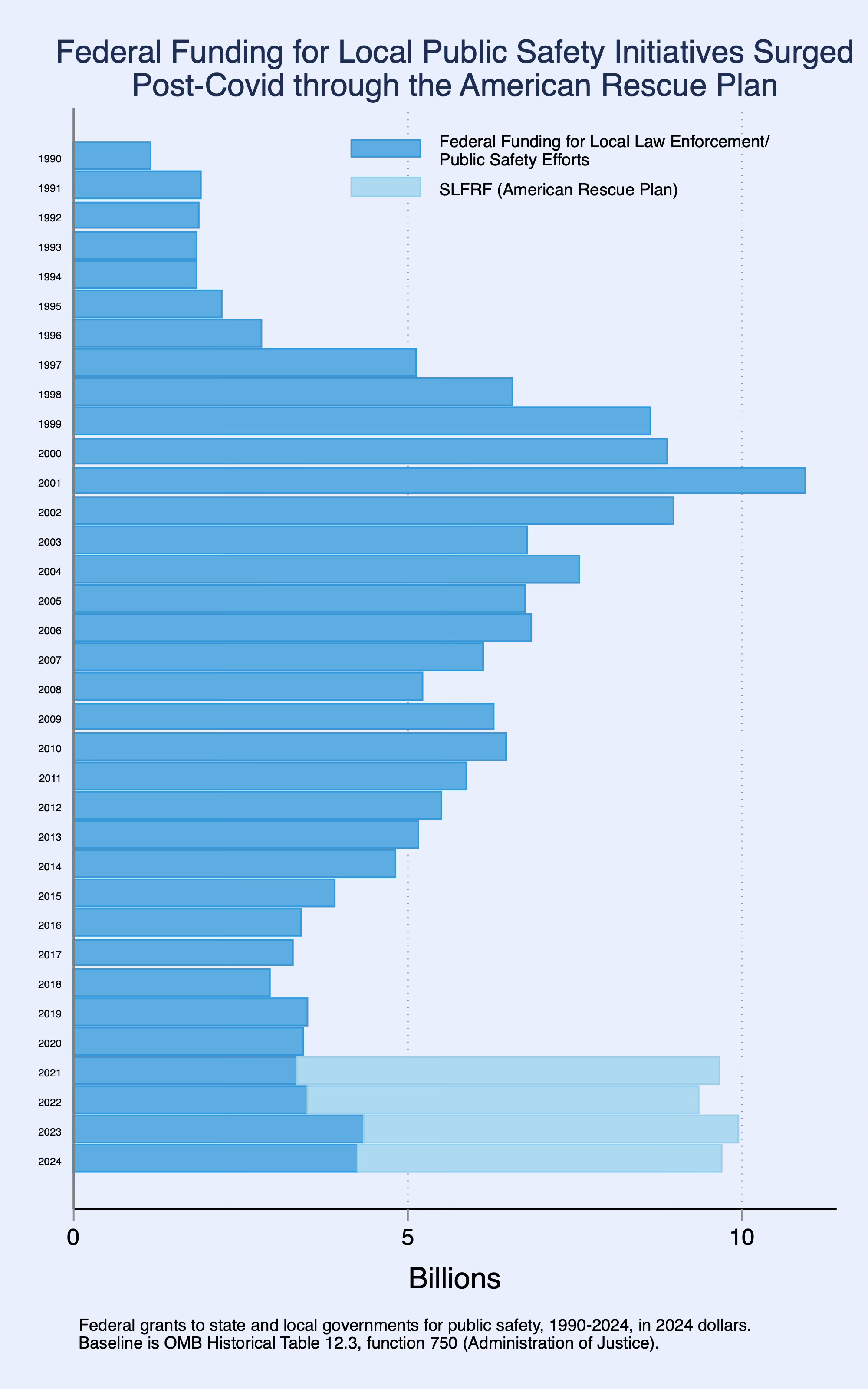
Before the 2021 stimulus passed, the Menino Survey of Mayors found that 27% of mayors anticipated making significant cuts to police budgets due to Covid shortfalls. ARP dramatically changed local governments’ cutback decisions. Cities invested a significant share of their funds in public safety initiatives, alongside other priorities, including housing, social services, and making up for lost revenues due to the pandemic. Public safety investment ranged from innovative community intervention strategies to rehiring police officers. A rough estimate from reporting data shows about $17 billion from the State and Local Fiscal Recovery Fund invested in public safety and violence prevention activities. That investment, combined with existing funding sources, provided annual funding to state and local law enforcement on a similar scale to the 1994 crime bill (adjusted for inflation).
Annualized, that pace of spending is comparable to — and arguably exceeds — the inflation-adjusted yearly authorization the 1994 crime bill provided for state and local law enforcement.
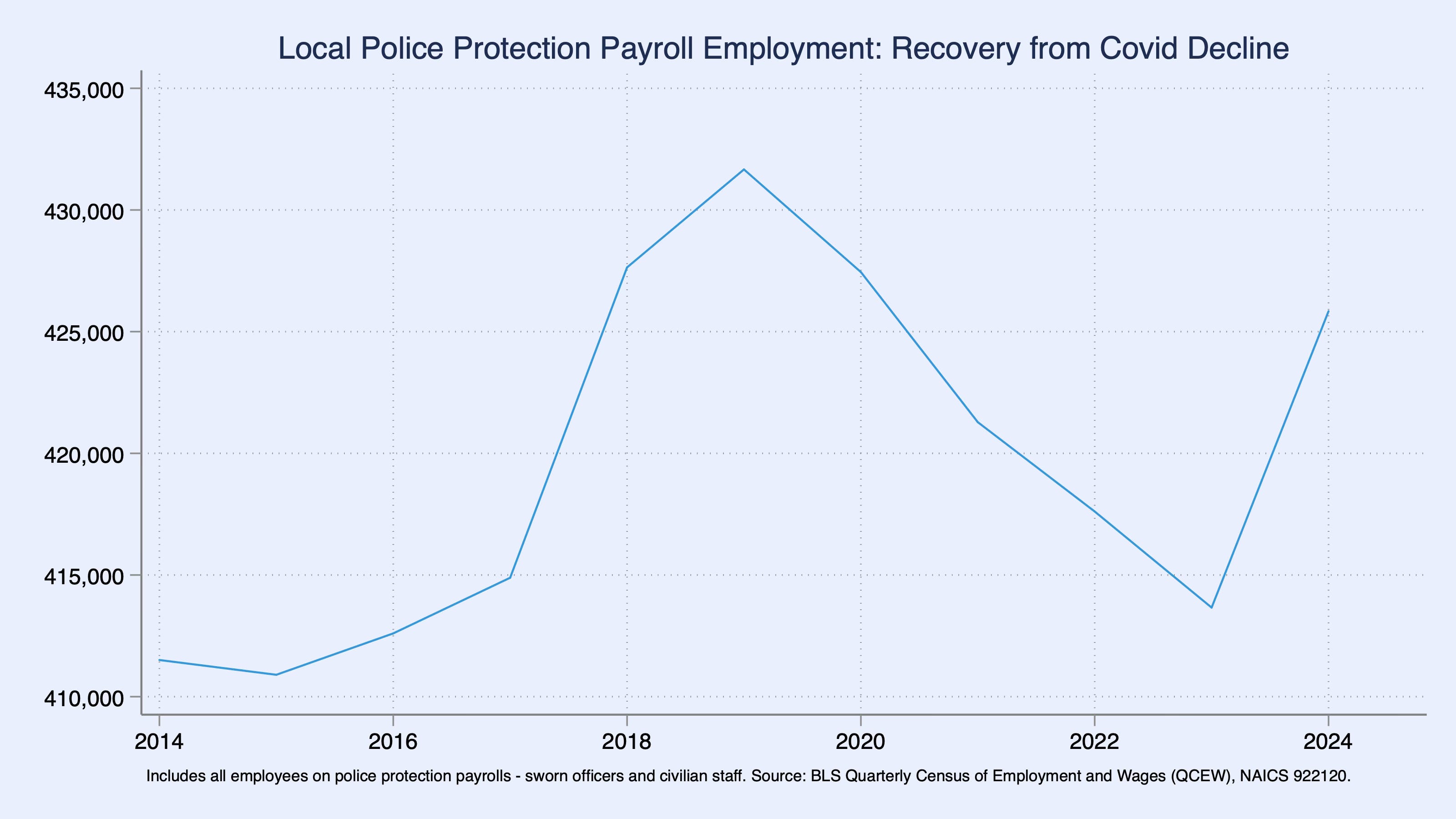
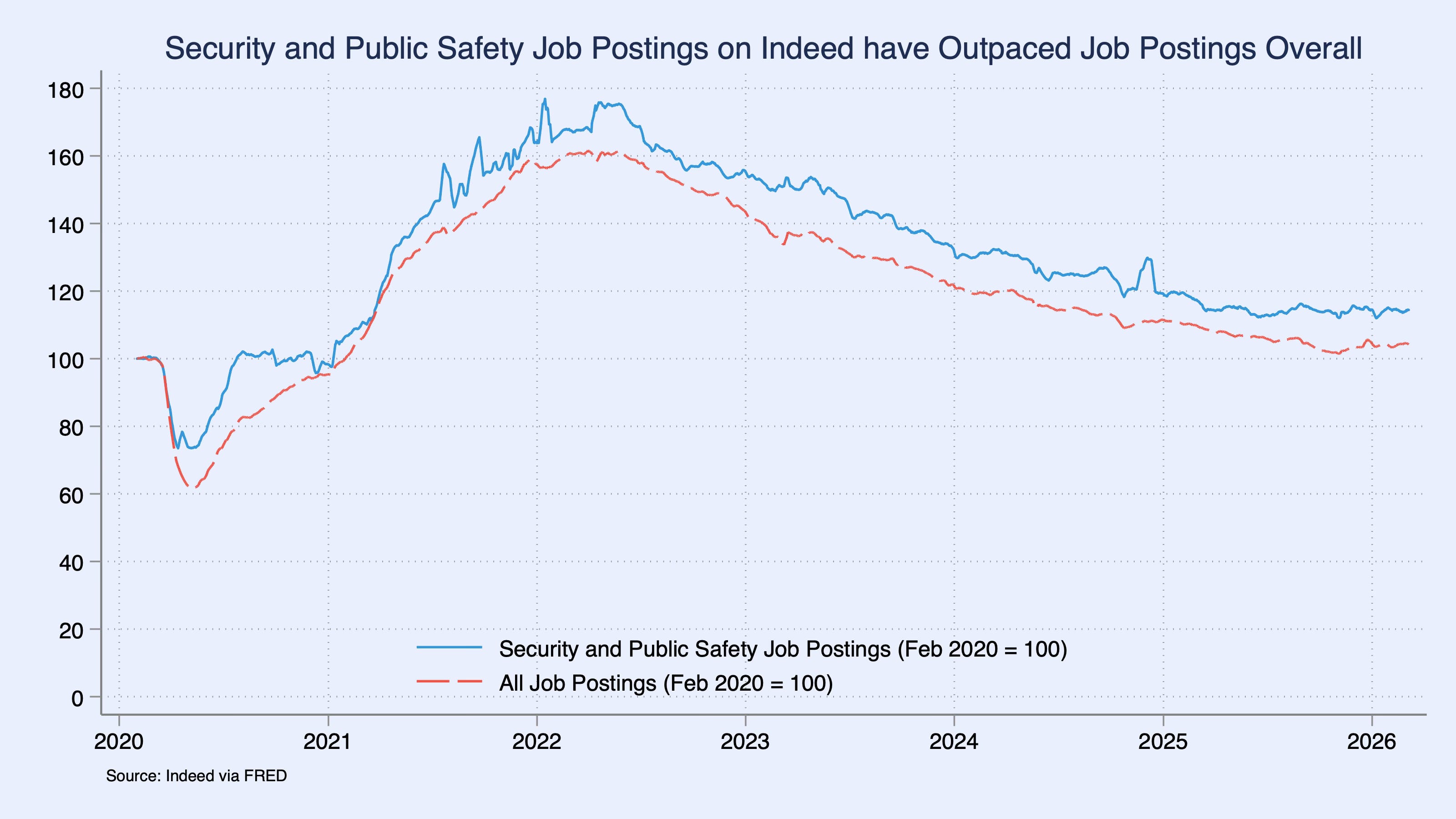
Fiscal relief to local governments allowed them to build back local government payrolls while restoring and expanding key services to deal with the public health and the economic and social impacts of Covid. We also started seeing progress in the number of police officers by 2024. The Bureau of Labor Statistics’ Quarterly Census of Employment and Wages suggests that by 2024, after a historic spike in police officer retirements during Covid, police payrolls were finally recovering to pre-crisis levels. This recovery in police payrolls may be playing a role in the crime decline.
John Roman, a public safety researcher at the University of Chicago, saw federal American Rescue Plan funding as a key driver of declines in crime. Roman notes: “If you look at the top 25 biggest cities in the U.S., all but maybe one or two have seen big declines, and the ARPA money went everywhere ... Everybody got the money. And that’s really the key clue to why it probably is those funds that explain the decline.” Roman argues that “every other explanation … is specific to one place or one program and doesn’t explain why crime and violence is declining massively everywhere.”
Economic research suggests that these kinds of policies have driven down crime before. In a 2019 paper, economists Ian Hoffman and Evan Mast used a natural experiment to find that when counties receive unexpected increases in federal funding, property crime fell 9% and violent crime fell 4%. Critically, they observed a significantly larger drop from federal funding shocks in low-income counties—with the difference both “economically and statistically significant.”
Dartmouth Economic Professor Steve Mello found that increases in COPS grants—recurring federal funds that support the incremental hiring of additional police—are associated with declines in crime. The 2009 stimulus following the Great Recession included an expansion of this program. But the expanded COPS grants were cut off based on application scores that led to “quasi-random” variation in grants, meaning that some communities got the funding while others didn’t. Mello found that communities that received grants saw police staffing increase by 3.2% and crime decline by 3.5%.
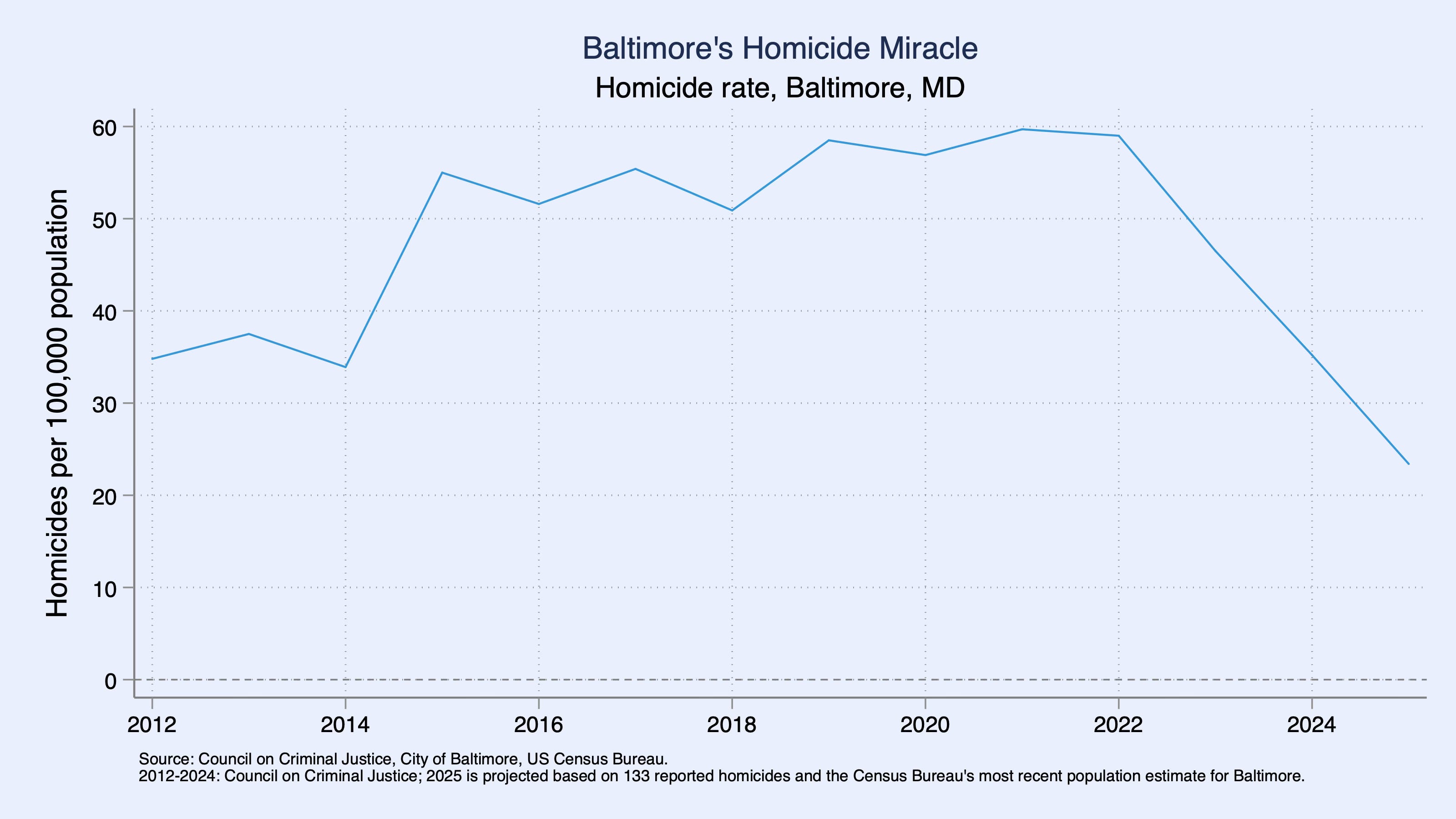
Baltimore is one of the strongest examples of a city where ARP funding assisted local efforts to dramatically reduce violent crime.
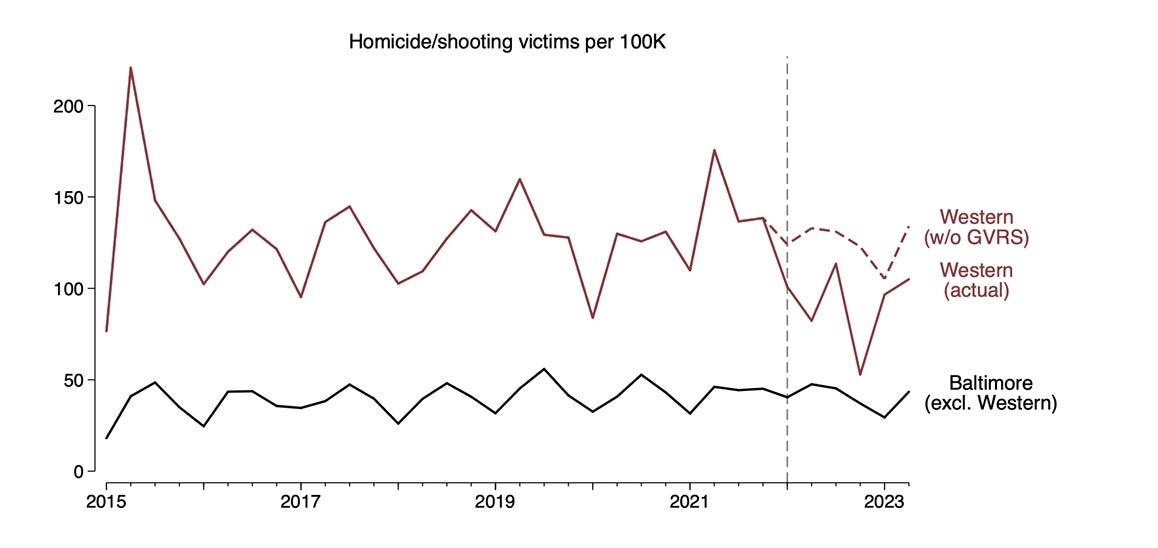
The city’s Western District is home to less than 6% of the city’s population but 16.2% of citywide homicides and non-fatal shootings between 2015 and 2021, according to a 2024 evaluation by the University of Pennsylvania’s Crime and Justice Policy Lab. Its 2021 homicide rate was “among the highest of any police district in the entire nation,” the Penn researchers found. “[A]pproximately 1 in 200 of the district’s residents were shot or killed that year.”
In January 2022, Baltimore launched the Group Violence Reduction Strategy (GVRS) in the district, funded through $50 million in ARP dollars allocated to the Mayor’s Office of Neighborhood Safety and Engagement. The strategy focused on “groups actively engaged in conflict, who make up a small percentage of the district population but are connected to as much as 75% of its shootings and homicides.” The University of Pennsylvania evaluation found that the city’s Gun Violence Reduction Strategy reduced homicides and shootings in the district “by approximately a quarter, relative to what they would have been otherwise.” The researchers found that “the size and timing of this reduction make it highly likely to be caused by GVRS.”
University of Pennsylvania Crime and Justice Policy Lab Model Shows Fewer Western District Baltimore Shootings with Gun Violence Reduction Programs than there Would Have Been Without
What should policymakers take away from this historic decline? In some ways, the ARP’s role as an anti-crime stimulus was a happy accident. The flexibility in the State and Local Fiscal Recovery Fund enabled cities and states to fund pressing priorities. Crime turned out to be one of the most important. Scholars should examine the kinds of state and local investments that worked best. In the next recovery package, policy-makers could both embrace law enforcement-specific funding through expanded COPS funding while also offering cities the flexible kind of funding that many put to good use after Covid. Whatever the size of the fiscal response to the next crisis, policymakers should weigh public safety alongside economic recovery, and turn this happy accident into a well-learned lesson.
 | A guest post by
|
About that drop in local police employment through 2023: In addition to retirements, I wonder if lower unemployment and higher wage gains in lower income brackets harmed recruiting. Similar to military recruiting then.
David Hackett Fischer has written a book, The Great Wave, where he follows 700 years of English records which show that the inflation rate and the murder rate are highly correlated. It still is true today. Correlation is not causation but it is intriguing.