

Rising prevalence of disability is part of COVID-19's evolving labor market legacy
Negative effects on labor force participation persist, as do higher rates of disability and employment among those with disabilities


The share of Americans reporting disabilities has continued to climb since our first post on this topic in September 2023, with cognitive difficulties among younger people continuing to drive much of the increase. New research reveals that health-related work absences—a key proxy for COVID-19 illness—have produced lasting reductions in labor force participation, though expanded work-from-home arrangements may be offsetting some of these effects. The increase in the prevalence of disability represents roughly 4 million additional people with disabilities compared to prepandemic levels, raising important questions about the economy’s productive capacity and the future of disability support programs.
Disability rates have continued to increase, with the largest gains among younger people experiencing cognitive difficulties
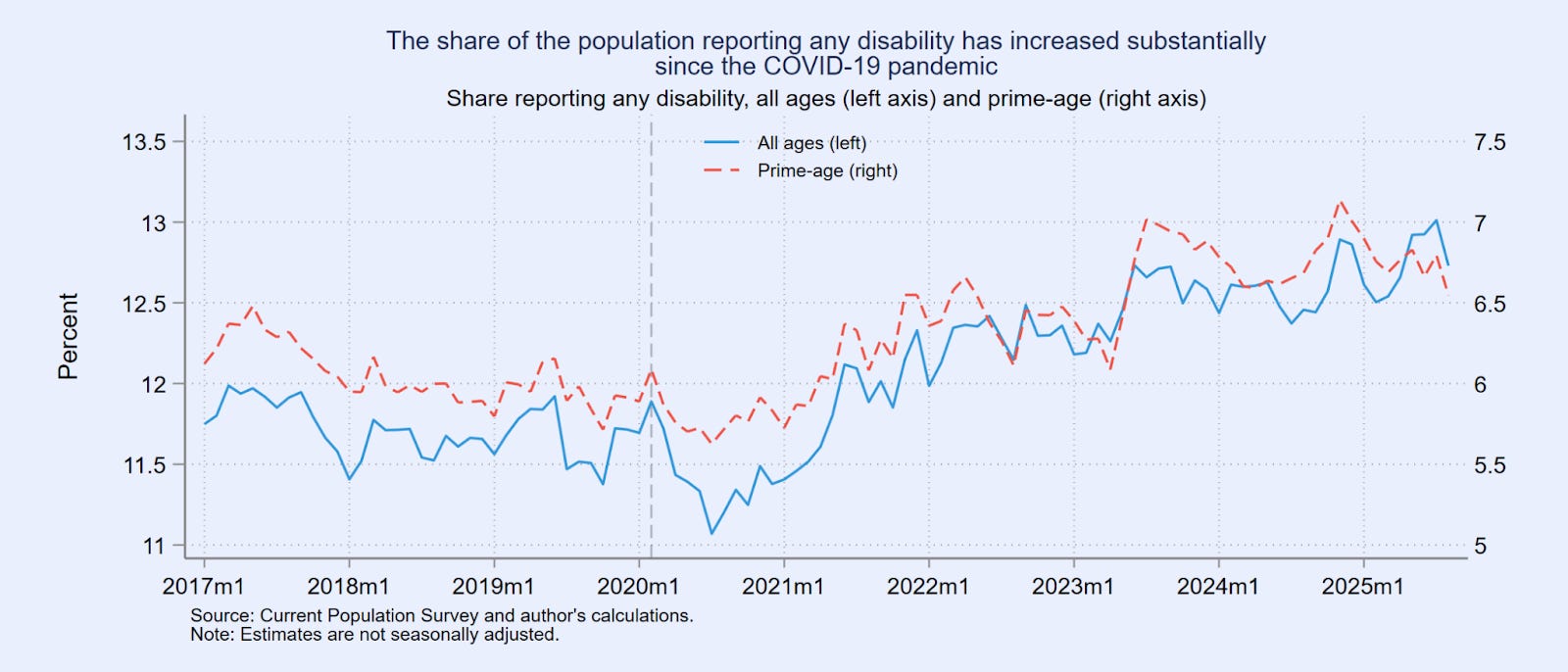
Since the onset of the pandemic, self-reported disability rates have risen substantially. Figure 1 displays the share of the population reporting any of six disabilities from January 2017 through August 2025 for all ages and for prime-age (25–54) Americans as measured by the Current Population Survey. Since February 2020, the share reporting any disability has increased from 6.1 percent to 6.5 percent among prime-age workers and 11.9 percent to 12.7 percent for all ages. This increase represents 4 million more workers reporting a disability, 0.8 million of whom are in their prime working years.
The driving force behind this increase in reported disabilities is an increase in “serious trouble concentrating, remembering, or making decisions.” Figure 2 shows the change in the prevalence of each of the six disabilities since February 2020. While difficulties with walking/climbing stairs or dressing/bathing have stayed relatively stable, the most striking pattern remains the increase in the number of people reporting serious trouble concentrating, remembering, or making decisions.
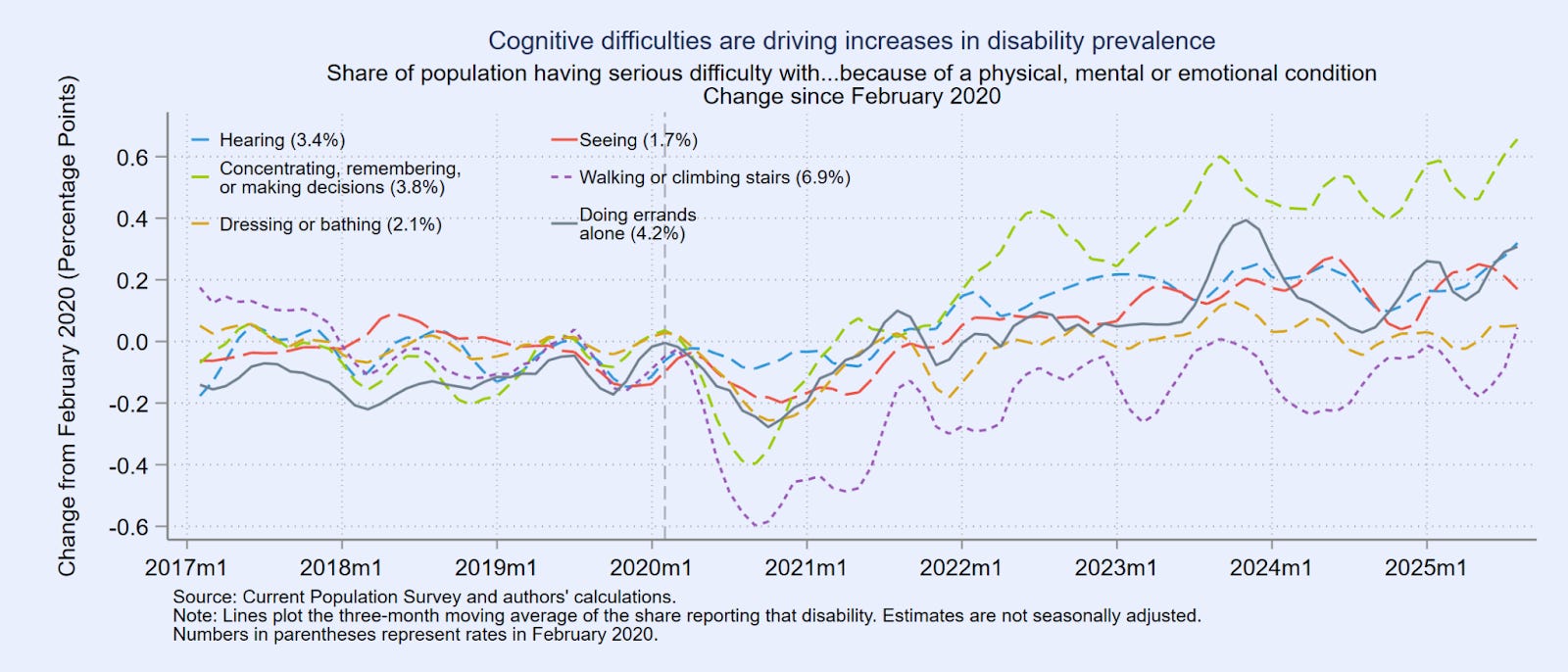
Figure 3 shows changes in the prevalence of cognitive difficulties by age group. The figure reveals that while younger individuals have lower levels of cognitive difficulties overall, these age groups have experienced the sharpest increases since the start of the pandemic.
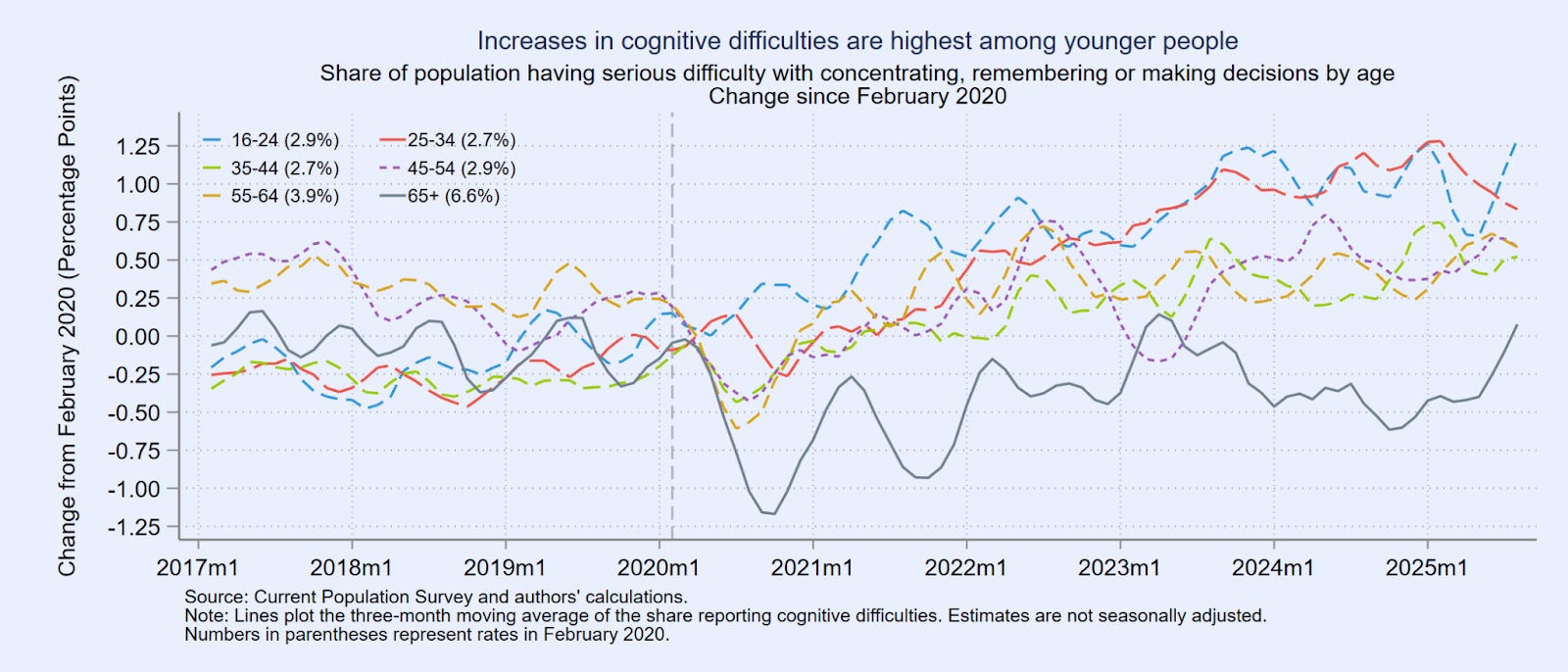
The age pattern is particularly concerning from a long-term perspective, as those in younger age groups face decades of potential labor market participation going forward. These younger workers experiencing cognitive challenges represent a potentially significant constraint on future economic growth if their difficulties persist or limit their productive capacity.
Health-related absences reveal COVID-19’s ongoing impact
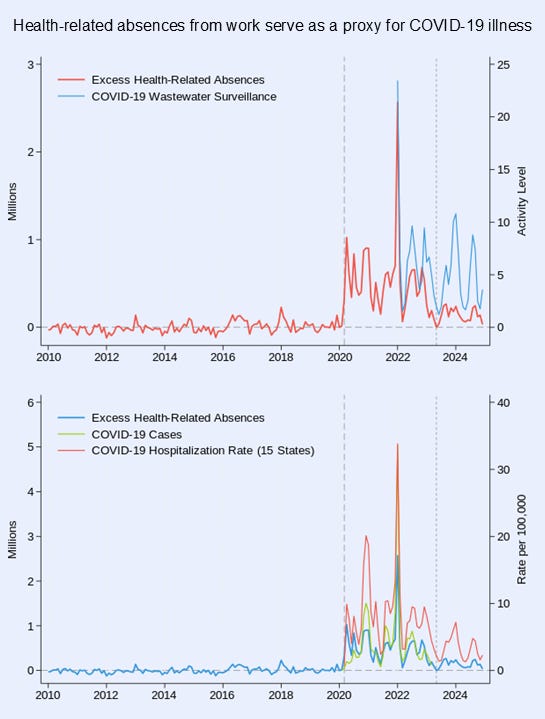
Research using health-related work absences as a proxy for COVID-19 illness provides new evidence on the pandemic’s labor market effects. Goda and Soltas (2023) showed that week-long absences from work spiked in time periods and places in which reported COVID-19 cases and hospitalizations were higher between March 2020 and June 2022. Dennet et al. (2025) extended this analysis through the end of 2024, finding that health-related absences are still correlated with COVID-19 wastewater surveillance, though the relationship between COVID-19 measures and absences is weaker following the end of the public health emergency (PHE) in May 2023. Specifically, COVID-19-related disruption resulted in a 57 percent increase in health-related absences during the pandemic period, and such absences have remained 13 percent higher since the PHE ended. Figure 4 shows how excess health-related absences compare to COVID-19 cases, hospitalizations and wastewater surveillance levels over time.
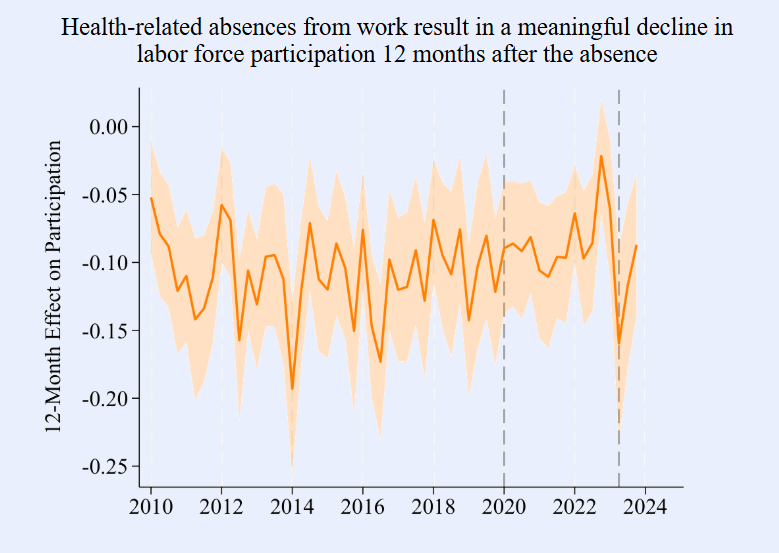
While the frequency of health-related absences has declined, the consequences of these health-related absences continue to be severe and persistent. Workers who experience health-related absences show a meaningful decline—approximately 10 percentage points—in labor force participation 12 months later. As shown in Figure 5, this effect was present prior to the COVID-19 pandemic and has largely persisted after the end of the PHE, suggesting that the average severity of a COVID-19-related absence from work is similar to that of a health-related absence prior to the pandemic and has stayed roughly constant after the end of the PHE.
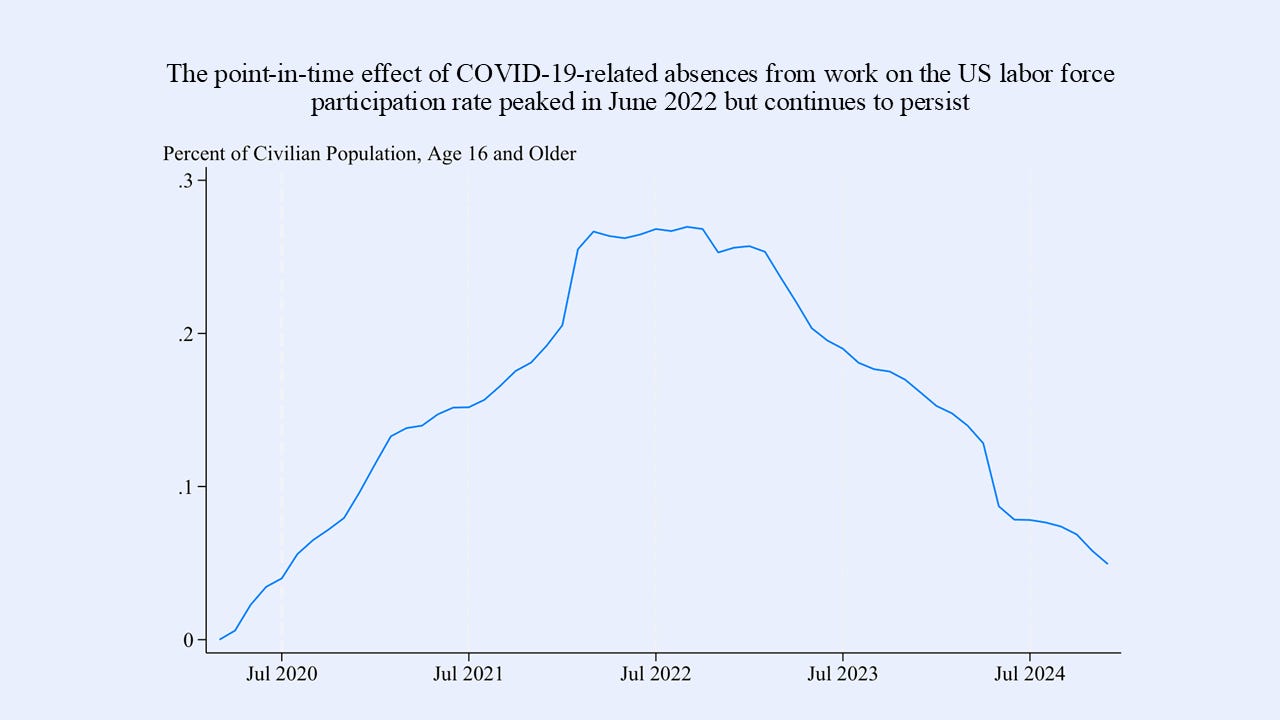
Combining these estimates of severity and frequency, the estimated impact of excess health-related absences from work as a result of COVID-19 on the US labor force participation rate peaked at 0.24 percentage points in mid-2022 and was approximately 0.05 percentage points by the end of 2024 (Figure 6).
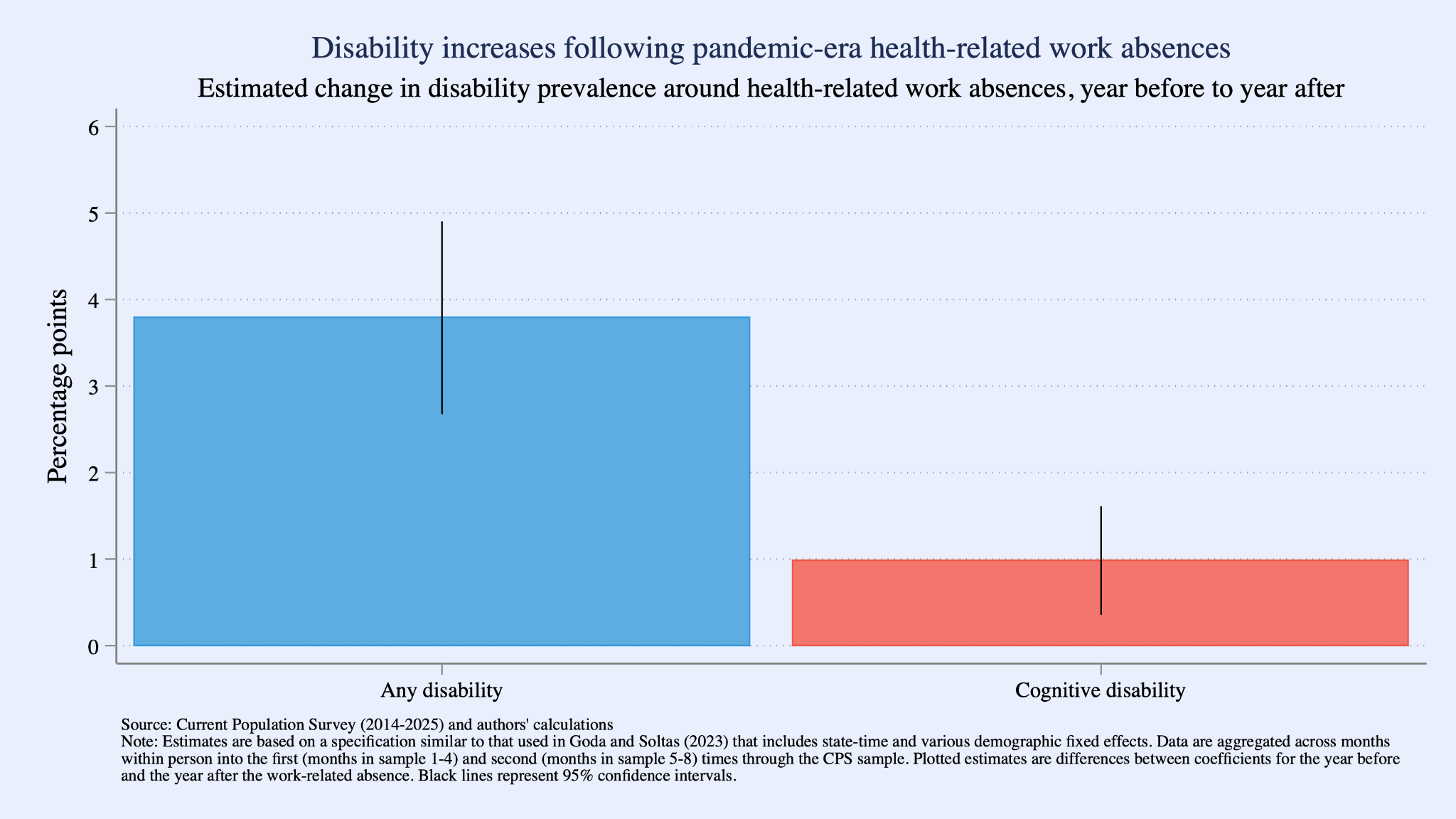
Similar analysis suggests that COVID-19 may also be contributing to the increase in the prevalence of disability. Workers who have health-related absences are more likely to report having a disability after the absence. A year later, the gap in the rates of reporting any kind of disability for workers with and without a health-related work absence has increased by nearly 4 percentage points; the gap in the rates of reporting cognitive disabilities has grown by about 1 percentage point (Figure 7).
Labor force participation among people with disabilities has increased, but the reasons are still unclear
Despite the rising prevalence of disability, employment outcomes for people with disabilities have shown remarkable improvement (Figure 8). Labor force participation among those reporting disabilities has increased notably since the pandemic began, from 20.9 percent to 25.5 percent. The increase among those with disabilities is in sharp contrast to labor force participation among those without disabilities, a number which has remained relatively flat over this period.
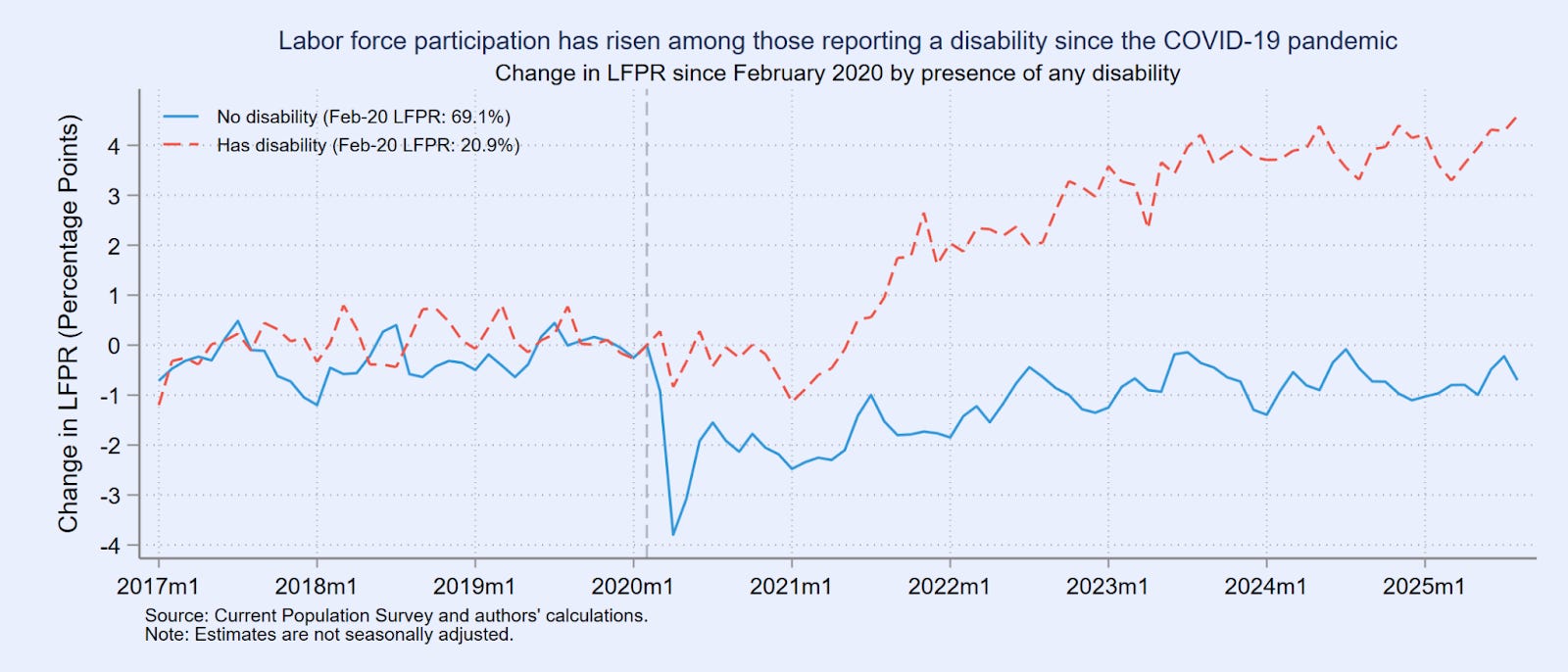
The increase in employment among people with disabilities could reflect several factors. The normalization of remote work during the pandemic may have removed barriers that previously limited job opportunities for those with mobility issues, cognitive difficulties requiring flexible schedules, or other health conditions. Tight labor markets may have also prompted employers to be more accommodating and creative in adapting roles to workers with different needs. However, these patterns could also signal a composition effect wherein those reporting disabilities represent a healthier group overall in the post-pandemic period.
Understanding the mechanisms can help mitigate the impacts of the higher prevalence of disability
The trends documented here present both challenges and opportunities. On one hand, the increased prevalence of disability—particularly cognitive difficulties among younger people—could reduce productive capacity, increase healthcare costs, and raise Social Security Disability Insurance expenditures if these conditions prove persistent and work-limiting. The potential for millions of young workers to experience lasting cognitive difficulties represents a significant concern for long-term economic growth.
Moreover, new evidence suggests that COVID-19 continues to impose disruptions on the labor market. While the frequency of absences from work has declined since the height of the pandemic, it remains elevated compared to prepandemic levels, and each absence still results in meaningful declines in labor force participation such that the aggregate impact is measurable.
On the other hand, the concurrent increase in labor force participation among people with disabilities suggests that labor force participation could expand even as the prevalence of disability rises. This implies that the economic costs of increased disability could be partially mitigated through policies and practices that make employment more accessible. The extent to which the reasons are related to increased workplace accommodations, particularly work-from-home arrangements, or compositional factors can help determine how both employer practices and government policy could harness the existing capacity for work in the population.
Several key uncertainties remain. First, the extent to which rising disability rates reflect long-COVID specifically versus other pandemic-related health effects or increased diagnosis and reporting remains unclear. Second, whether the increased prevalence of disability will persist, increase further, or gradually decline as the pandemic recedes is unknown. Third, the degree to which current employment gains among people with disabilities will be sustained if work-from-home opportunities contract is uncertain.
Continued monitoring of disability trends through surveys such as the Current Population Survey and administrative data from the Social Security Administration regarding applications for its disability program will be essential. Policymakers should pay particular attention to cognitive difficulties among younger workers given the potential for these challenges to affect individuals across their entire working lives.
If work-from-home arrangements and other flexible work options prove effective in maintaining employment among those with disabilities, preserving and expanding access to such arrangements could help offset the economic costs of the increased prevalence of disability. Understanding which types of accommodations work best for different types of disabilities will be crucial for policy design.
Finally, the healthcare system’s capacity to treat and manage COVID-19’s long-term effects, including cognitive difficulties, will play an important role in determining whether current increases in disability represent a permanent shift or a temporary phenomenon. Research into effective treatments and interventions for post-COVID-19 cognitive difficulties should continue to be a priority.
Per the Federal Reserve and Bureau of Labor Statistics, the labor force disability rate has increased an unprecedented 35-38% since the start of the pandemic. Also per Swiss Re, the mortality rate is at unprecedented 3%.
More people are disabled from covid / Long Covid, and growing due to reinfections regardless of vaccine status, because even a mild infection can result in Long Covid. Every infection you’re playing Russian Roulette. Long Covid is also a progressive disease for many / most, so those struggling to hold onto their jobs might very well not be able to in a couple years’ time.
And more people are dying of heart attack, stroke, seizure, embolisms/blood clots, diabetes, dementia, etc bc covid is a neuroimmune vascular disease that we’ve let run rampant and mutate for 6 years.
This isn’t going to stop until there is the preventative vaccine that we were promised at the start of the pandemic. And by then we’ll have a lot more death, and disability that hopefully won’t be irreversible from years of covid infections.