Policy Highlights from NBER Summer Institute 2026
Tariffs, health care, safety net access, labor

For the last three weeks, economists across fields have gathered in Cambridge, MA for the National Bureau of Economic Research’s annual Summer Institute. Papers on the program touched on several important policy areas. Here are some highlights.

Tariffs
Paying More and Buying Less: 2025 Tariffs and U.S. Household Spending
Sinem Hacioglu-Hoke and Leo Feler
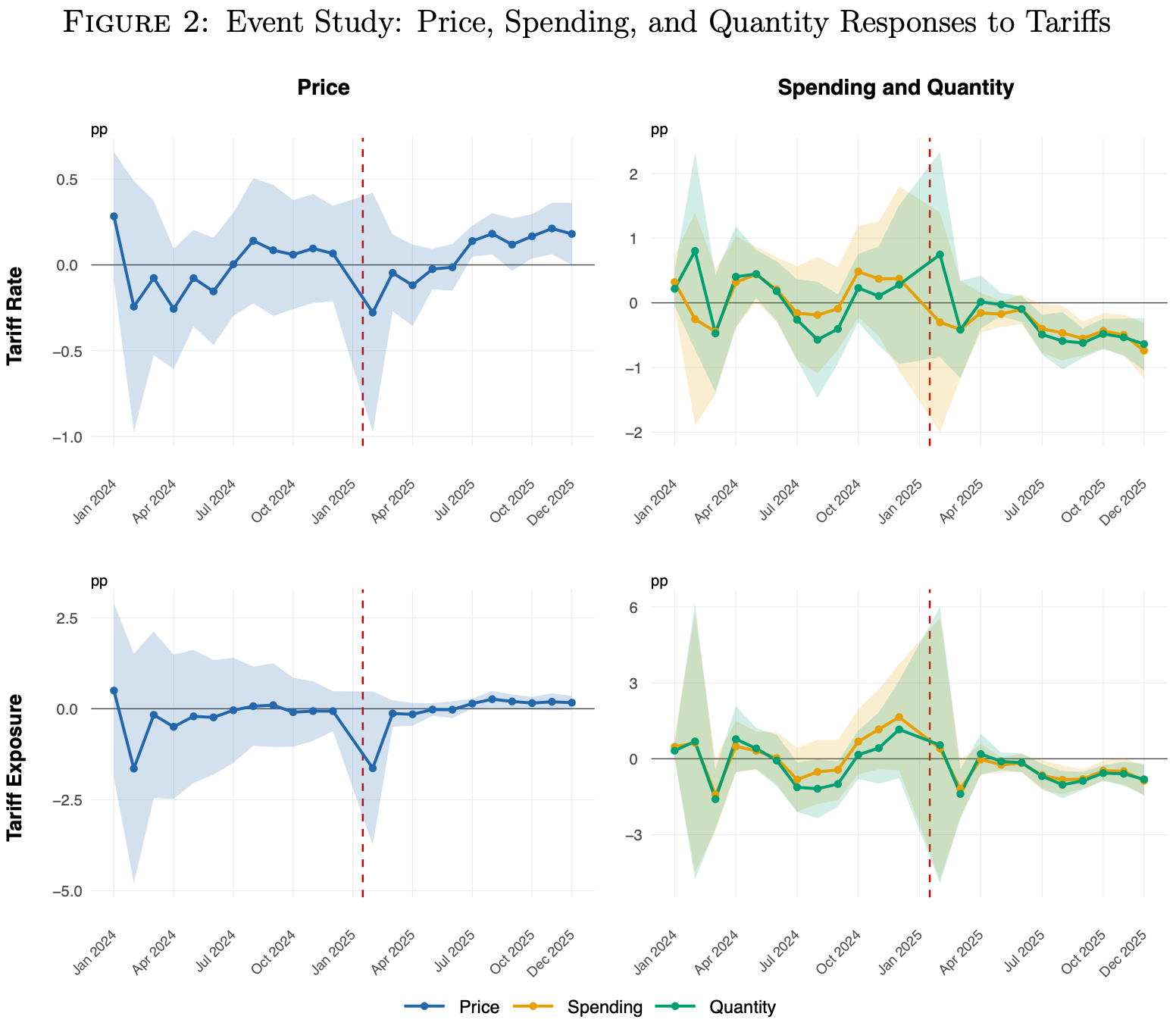
This paper estimates the effects of the 2025 U.S. tariffs on household spending using transaction-level data linked to tariff exposure and a tariff sentiment survey. Comparing high versus low tariff-exposed categories, we find 15 to 20 percent price pass-through. At the mean increase in tariff exposure, prices rise by 1 to 2 percent while spending falls by roughly 4 percent. Survey evidence linking stated intentions to revealed behavior identifies a mechanism for the large spending response: reallocation toward essentials and trade-down within categories, concentrated among middle-income households with discretionary slack who express tariff concerns. Low-income households bear a disproportionate welfare burden through regressive pass-through.
Tariff Pass-through into Retail Prices: Measurement, Replacement, and Shrink-flation
Liang Bai, Torsten Scouting Jaccard, and Sebastian Stumpner
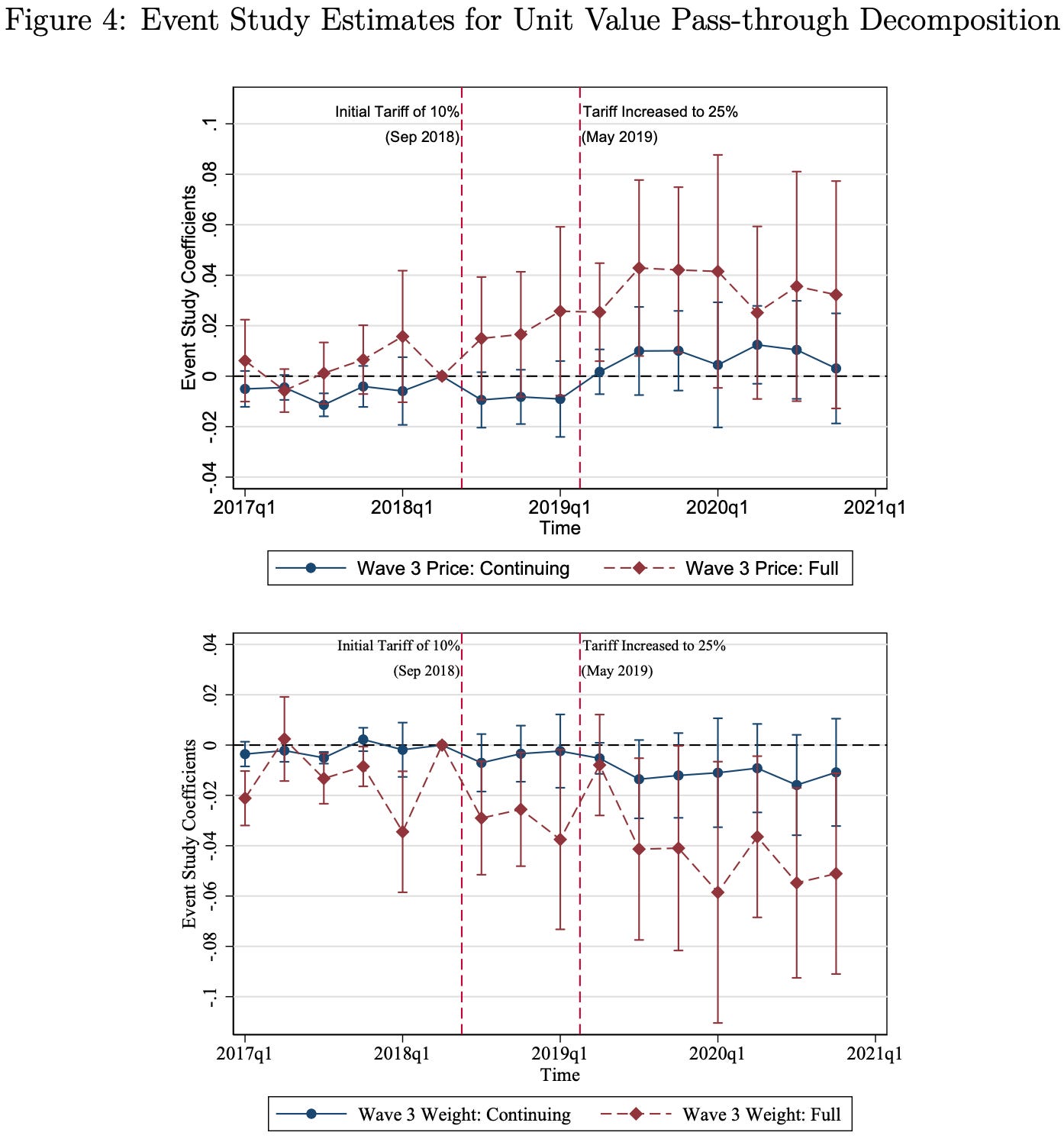
To what extent do import tariffs pass-through into retail prices? Existing estimates for the U.S.-China trade war present a puzzle: pass-through into U.S. border prices was complete, with seemingly no effect on retail prices. We combine barcode country-of-origin data with retail scanner data to address this apparent discrepancy in the context of consumer goods. Within barcodes, the tariff elasticity of retail prices is 0.14, yet the tariff elasticity of aggregated prices per unit weight, a measure similar to the unit values recovered from customs data, is 0.29. This discrepancy is attributable to product replacement bias: pass-through occurs predominantly via product turn-over towards barcodes with higher price per unit weight, half of which is achieved via smaller package size. We estimate a foreign cost share of U.S. retail imports consistent with high, if not complete, pass-through into retail prices. U.S. consumers therefore bore almost the entire incidence of tariffs levied on consumer goods.
Do Foreigners Pay for Tariffs?
Rodrigo Adao, Keelan Beirne, Arnaud Costinot, and Dave Donaldson
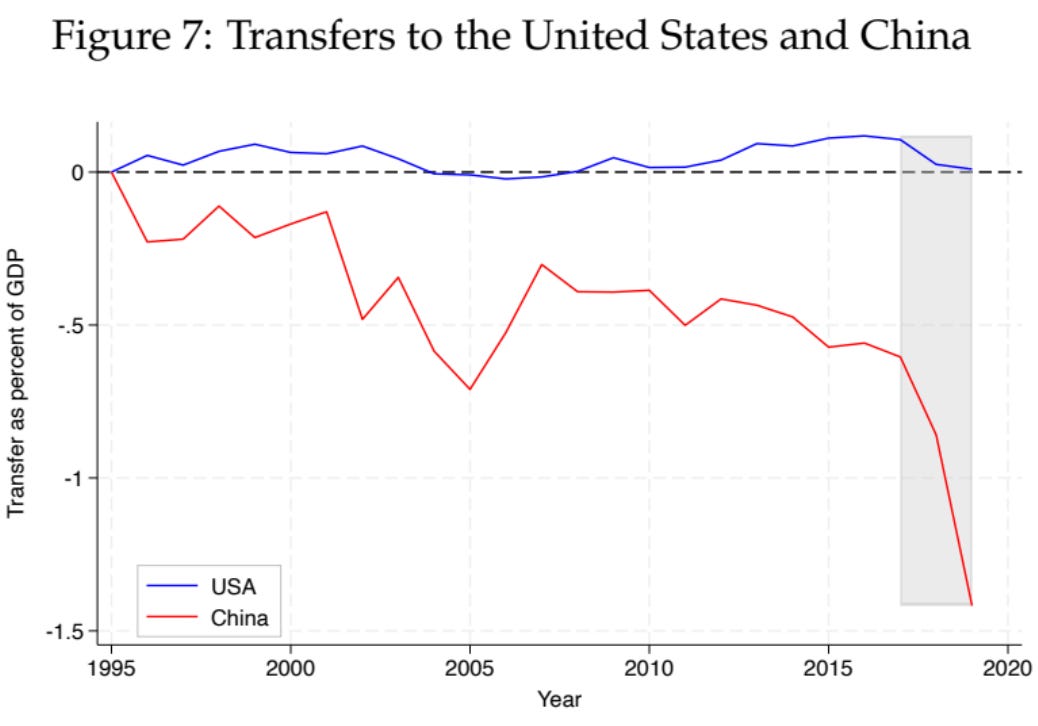
In this paper, we provide empirical evidence that foreigners pay for tariffs to a substantial extent. Motivated by a large theoretical literature, our hypothesis is that country’s overall exposure to tariffs drives movements in the average price of its entire export basket, a macro effect, whereas its direct exposure on one of its products moves only this product’s price, a micro effect. Using data on the near universe ofworldwide export prices and tariff changes between 1995 and 2023, we estimate asmall and statistically insignificant micro effect, in line with recent empirical studies,but a large and significant macro effect. Quantitatively, the macro effect that we esti-mate implies annual tariff-induced transfers across countries over the sample periodthat range from -1.4% of GDP at the 10th percentile of the distribution to 3.1% of GDPat the 90th percentile. The same exercise using our estimates of micro effects impliestransfers of -0.2% and 0.1%, respectively.
Tariff Front-Running
Maria-Jose Carreras-Valle and Sang Min Lee
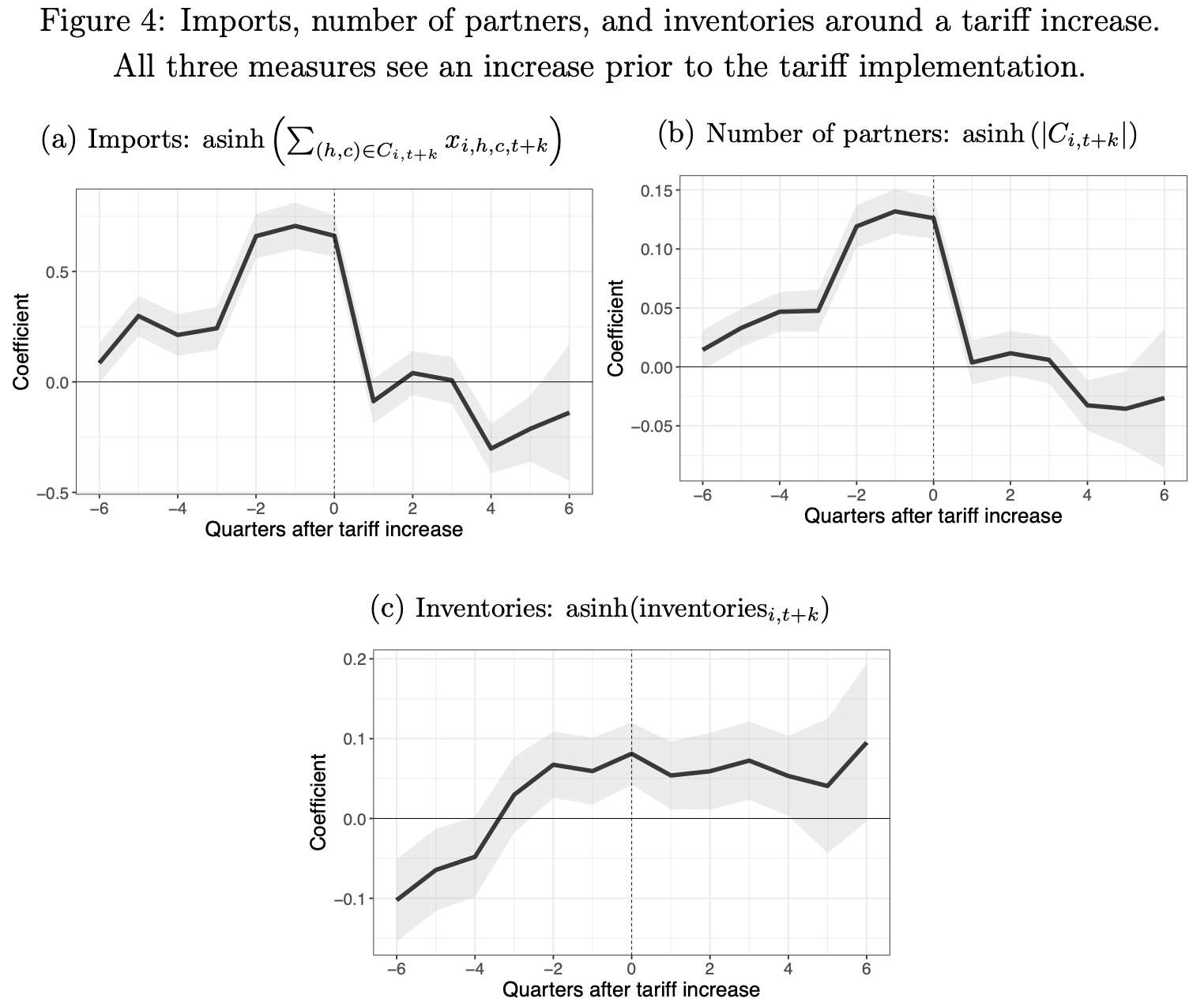
We examine US firms’ responses to future tariff increases and their macroeconomic implications. We build a novel firm-level import dataset and use it to study the 2018–2019 tariffs on steel, aluminum, and Chinese imports. We find that firms front-run tariffs by exploiting the roughly one-year lag between the initiation of the investigation into foreign trade practices and tariff implementation: Firms’ imports, inventories, and number of product-country partners begin to rise a year before the tariff increase. Moreover, firms increase imports not only from the targeted product-country but also from the same product in countries unaffected by the tariff, along both the intensive and extensive margins. We then develop a dynamic trade model in which forward-looking firms hold inventories and choose their set of trade partners. We find that tariff front-running puts downward pressure on aggregate prices and expands output prior to the tariff and that these anticipatory responses generate a smoother and longer transition to the new steady state. Last, we find that anticipatory responses lead to short- and long-run trade elasticities roughly twice as large as those in the unanticipated case.
Health Care
The Effects of Deleting Medical Debt from Consumer Credit Reports
Victor Duarte, Julia Fonseca, Divij Kohli, and Julian Reif
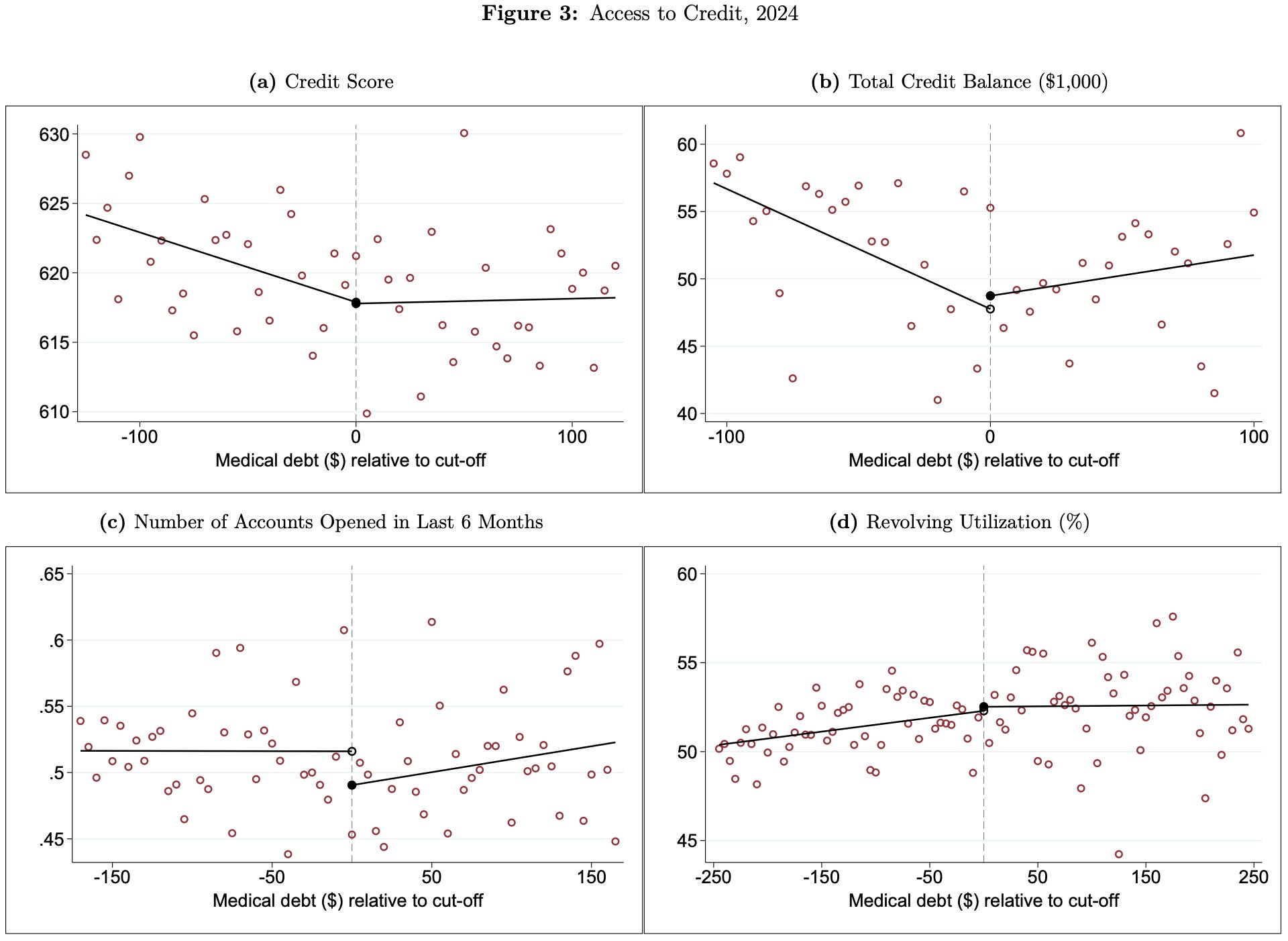
In April 2023, credit bureaus stopped reporting medical debt collections below $500. We study the effects of this information deletion on credit access and financial health. Regression discontinuity estimates comparing individuals just above and below the $500 threshold show that deletion reduced reported medical collections by 61 percent. We find no evidence of benefits over the subsequent two years. To interpret these findings, we build credit scoring models and show that medical debts, regardless of size, add minimal information for default prediction. Our results suggest that eliminating medical collections entirely from credit reports would be unlikely to affect credit outcomes.
Fragmented Insurance and Billing Frictions: Understanding Denied Health Insurance Claims
Riley League, Mark Shepard, and Myles Wagner
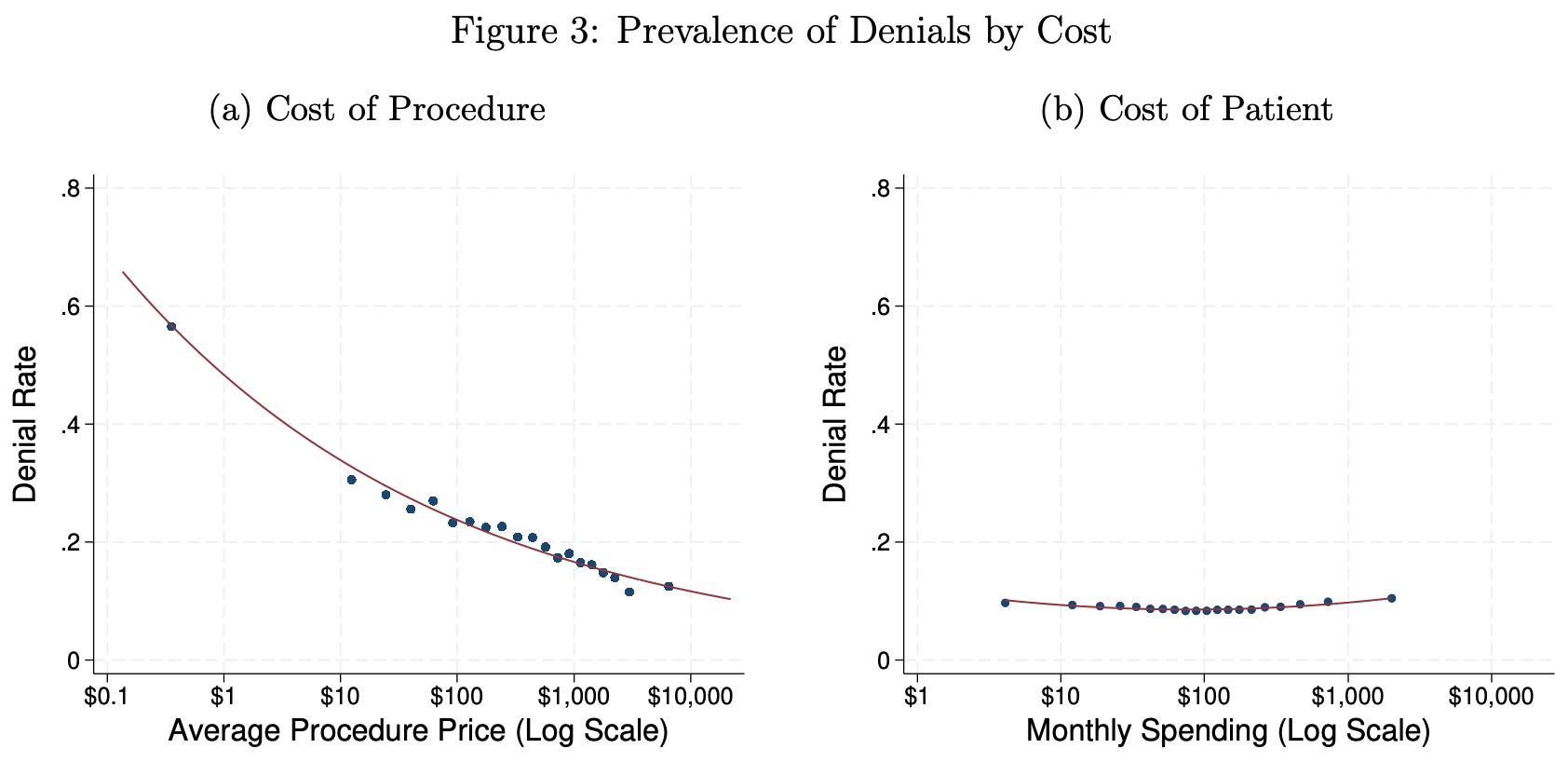
Billing and insurance-related activities are a major contributor to the high administrative costs of the US health care system. Yet the economics of claim denials—one of the most visible manifestations of billing frictions—remains poorly understood. We argue that the prevalence of denials presents an economic puzzle and study why they persist in equilibrium. Using data from the Massachusetts All-Payer Claims Database, we document that claim denials are widespread across insurers, occur frequently for services that an insurer predictably denies, and are especially common for routine, low-cost services. Using a simple model of insurer billing, we argue that insurer fragmentation, combined with limited provider ability to tailor billing strategies across insurers, can explain these otherwise puzzling patterns. Consistent with this mechanism, denial rates rise when patients switch insurers and vary substantially across insurers for the same services, suggesting providers do not finely tailor billing across payers. We also show that denial rates are lower for providers with more billing experience and for vertically integrated provider–insurer pairs. Together, our results highlight how fragmented insurance systems and heterogeneous coverage rules can generate administrative inefficiencies and contribute to the high costs of the US health care system.
A Double Dose of Reform: Insurance and Centralized Negotiation in Drug Markets
Panle Jia Barwick, Ashley Swanson, and Tianli Xia
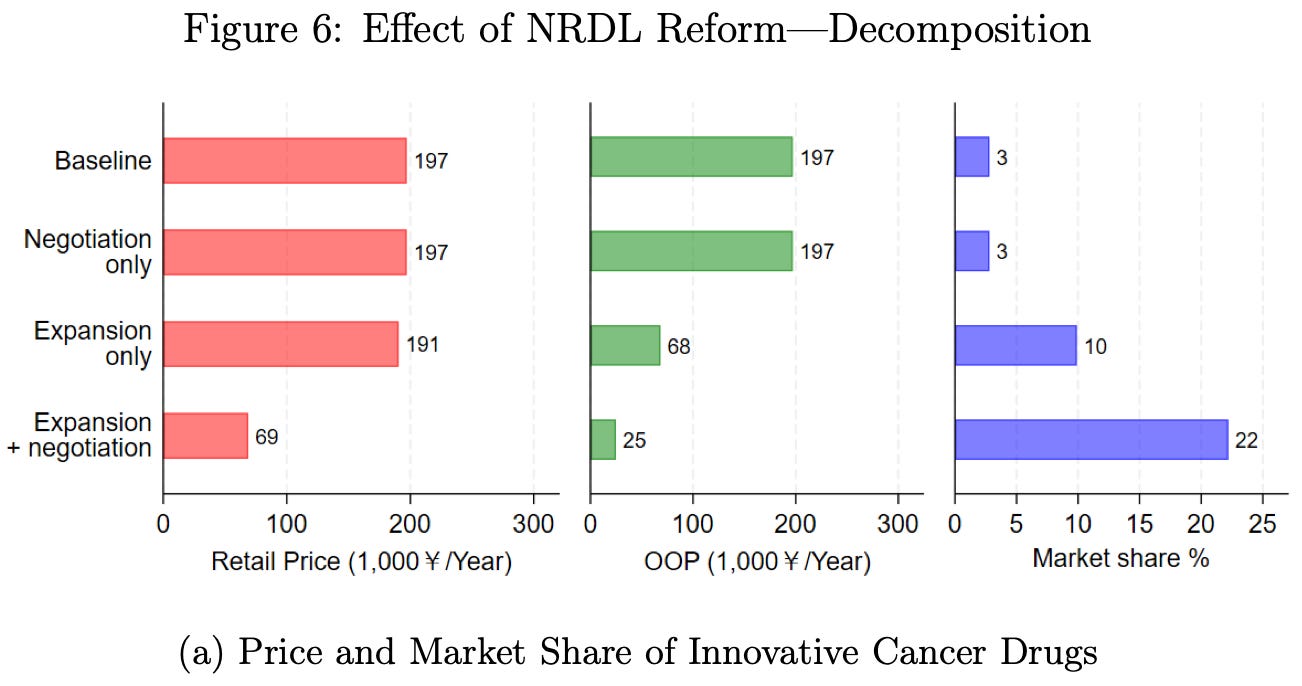
Making innovative drugs affordable and accessible is a pressing global challenge. Centralized negotiation is an increasingly popular policy solution, but it remains under-studied despite wide variation in implementation. This paper studies China’s ongoing National Reimbursement Drug List (NRDL) Reform, which combines centralized drug price negotiation with expanded insurance coverage. The reform reduced retail prices by 48% and out-of-pocket costs by 80%, and increased drug utilization by 350%. At the same time, the insurance design was regressive, and 25% of negotiations failed. Focusing on cancer drugs, we estimate a flexible demand and supply model that features standalone and combination cancer drug regimens, heterogeneous households, bargaining with potential breakdowns, and a government objective function that depends on consumer surplus and insurance spending. We estimate that including innovative cancer drugs in the NRDL generated Y37 billion ($5.3 billion) in annual consumer surplus gains and increased survival by 1.1 million life-years among Chinese cancer patients each year. Among the counterfactual policies we examined, centralized market-access negotiation with an optimal coinsurance schedule raises social surplus by 29% relative to the observed policy and achieves 93% of the social surplus of an efficient benchmark.
Safety Net Access
When Food Stamps Became Free: Impacts and Implications of Removing the Purchase Requirement
Amy Finkelstein, Matthew Notowidigdo, and Charlie Rafkin
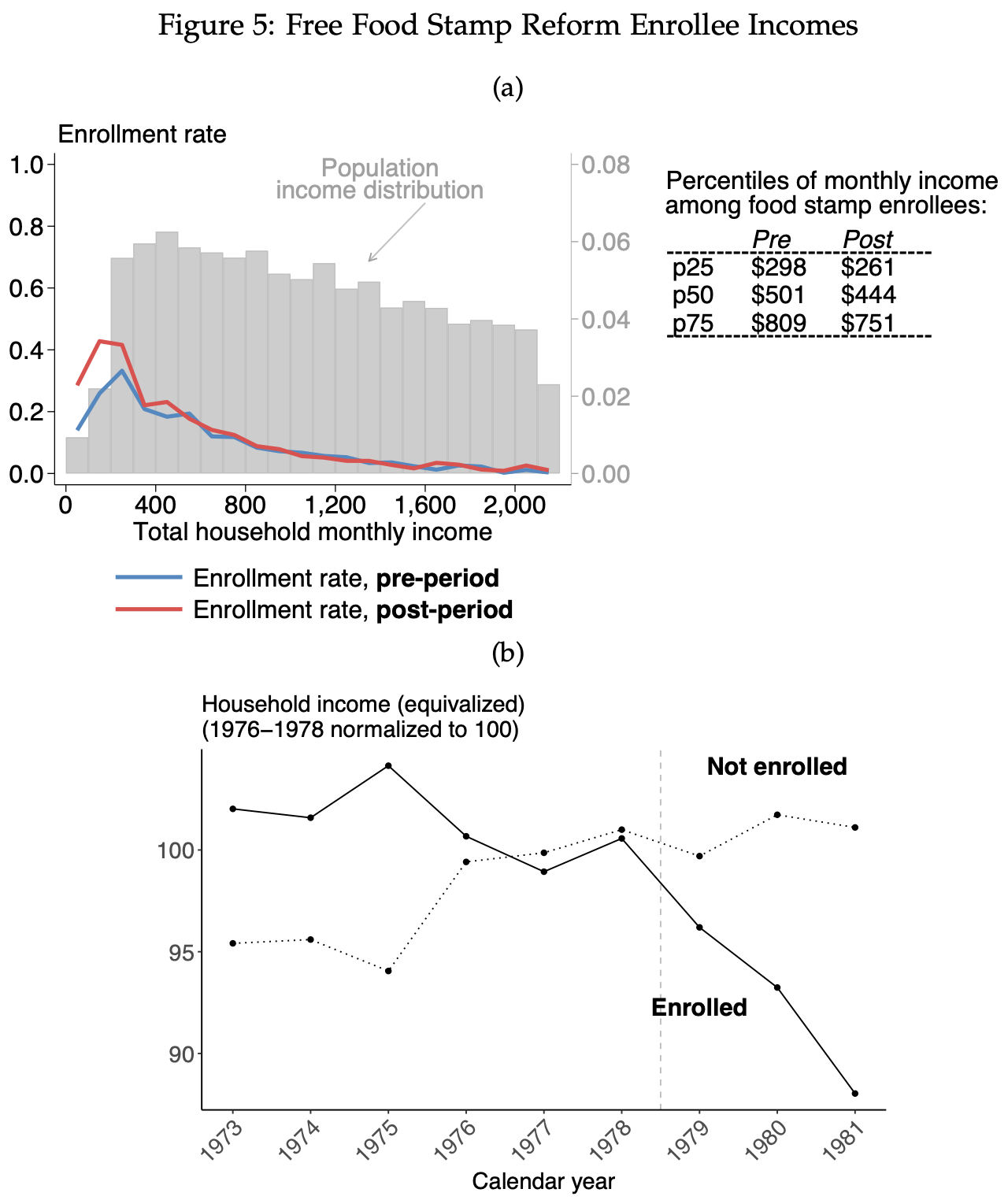
We provide positive estimates of the impact of food stamps on infant health and normative analysis of this large-scale transfer program, using geographic variation in exposure to the 1979 elimination of the food stamp “purchase requirement.” After this reform, eligible households received their food stamps for free, rather than paying 35 cents on the dollar. Making them free raised enrollment by 1.85 percentage points (standard error = 0.15), or about 25%, with new enrollees substantially poorer than existing participants. Using the free stamps reform as an instrument for enrollment, we find no evidence that food stamp enrollment improved infant health. For instance, 95% confidence intervals rule out that gains in birth weight exceed 2%; estimates that add the initial program rollout as an additional instrument also show similarly precise nulls. Under a revealed-preference assumption, the enrollment response to the reduced price of food stamps implies an average private value of 59 cents per dollar of free food stamps, with nonparametric bounds of 42–77 cents. While moving to free food stamps improved targeting on social value, it greatly reduced targeting on private value.
The Financial Consequences of Being Denied Benefit Access
Tatiana Homonoff, Min Lee, and Katherine Meckel
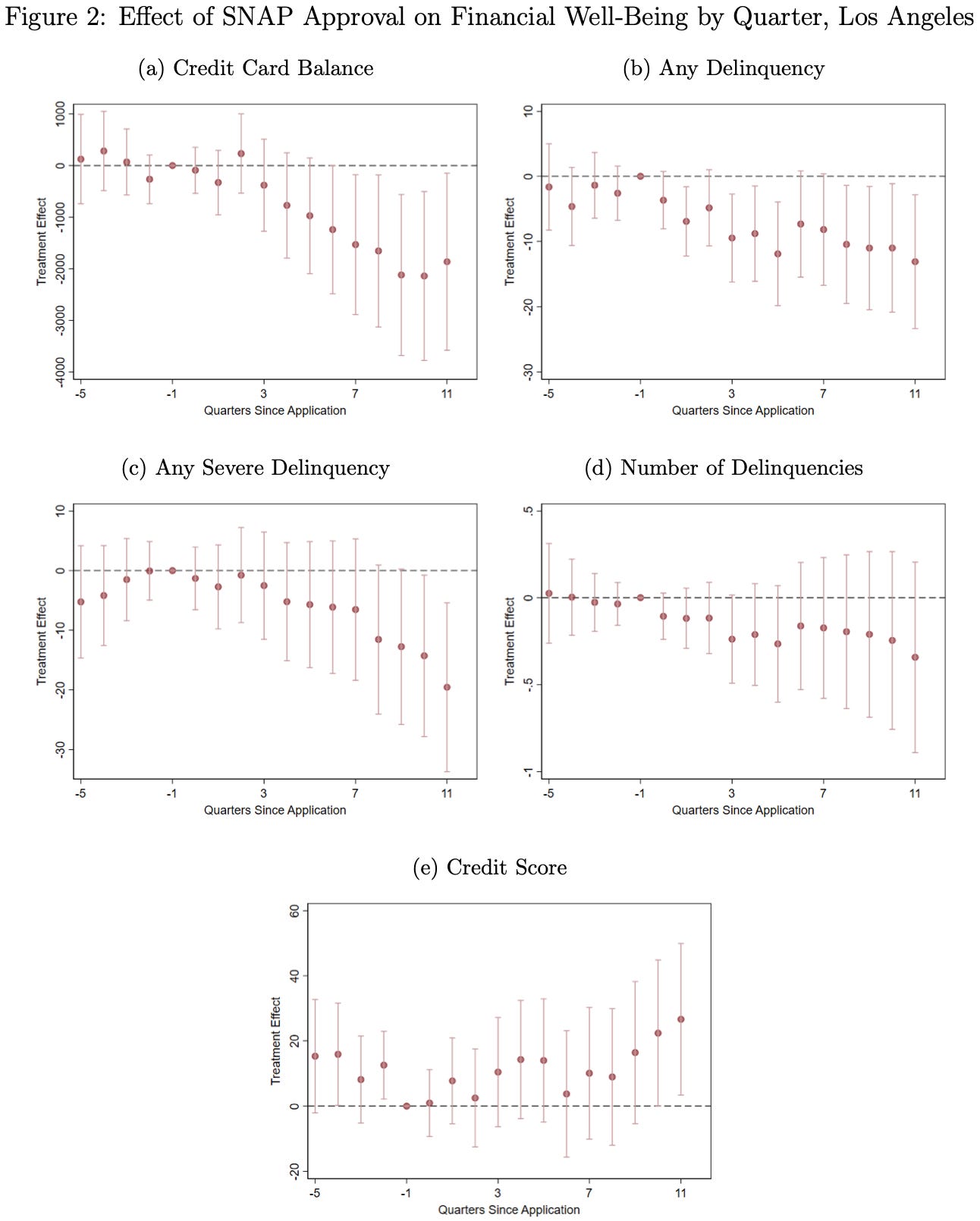
We estimate the causal impact of the Supplemental Nutrition Assistance Program (SNAP) on financial well-being by exploiting experimental variation from two interventions that reduced administrative barriers for individuals seeking to gain or maintain SNAP access. Linking administrative SNAP records to consumer credit reports, we estimate the effect of benefits among applicants approved because of increased flexibility in mandatory intake interviews. Reducing process-related denials improves financial outcomes for marginal beneficiaries, decreasing debt and delinquencies while increasing credit scores. These results demonstrate that implementation design not only shapes access to social insurance programs, but materially affects their capacity to reduce financial distress.
Labor
Courts of Tomorrow: Evidence from a Nationwide Rollout of Generative AI
Sultan Mehmood, Christoph Goessmann, and Elliott Ash
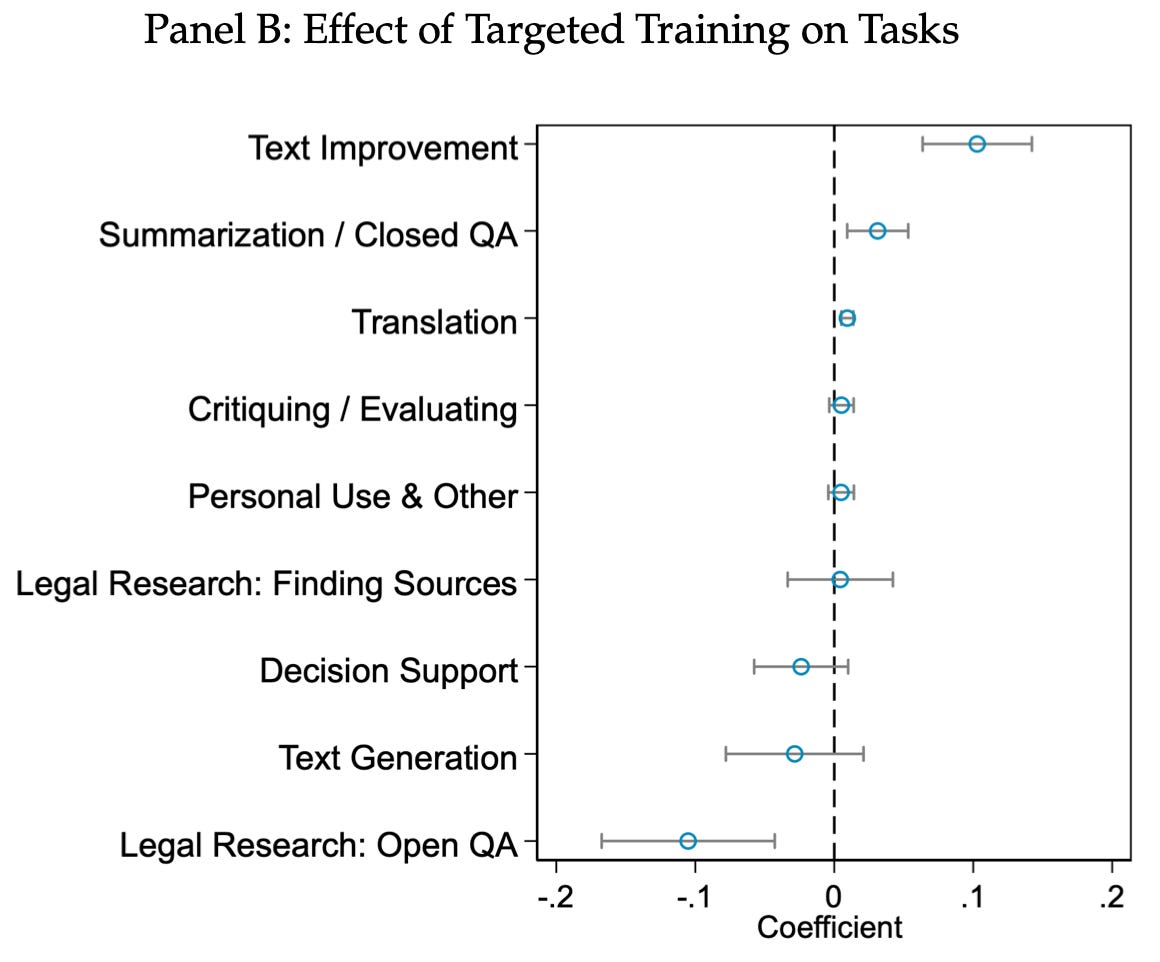
We present the first large-scale field experiment evaluating the integration of generative AI into a national justice system. In partnership with Pakistan’s judiciary, we built JudgeGPT, a custom generative AI assistant designed for Pakistan’s trial courts, and randomized 1,559 judges serving across 118 courts into one of three arms: (i) access to the assistant with targeted training tailored to its use; (ii) access to AI with generic training on technology and law; and (iii) generic training without access to AI. Judges who received AI access together with targeted training on the use of the tool were more likely to adopt it, use it more intensively, and continue using it over time. Their attitudes toward AI also shift: they expect the tool and the targeted training to increase their productivity. Administrative records move in the same direction: districts with greater exposure to treated judges resolve more cases. At median-district exposure, introducing AI with targeted training corresponds to 1,848 additional cases resolved per year, a 6.3 percent increase over the mean. This increase does not appear to come at the expense of reduced quality, as measured by case appeals (which slightly decline) or text-based measures of judicial writing (which slightly improve). Chat-log-based usage patterns suggest that judges use AI mainly to clarify legal concepts and support drafting. Targeted training appears to shift use toward tasks where language models are likely to be more useful, such as text improvement, and away from more open-ended legal queries where responses are more costly to verify. Overall, the results suggest that generative AI can raise public-sector productivity, but that these gains may depend on targeted training that directs use toward tasks for which the tool is better suited.
Learning About Police Bias: How Monitoring the Police Changes Prosecutors’ Beliefs and Decisions
Emma Harrington and Hannah Shaffer
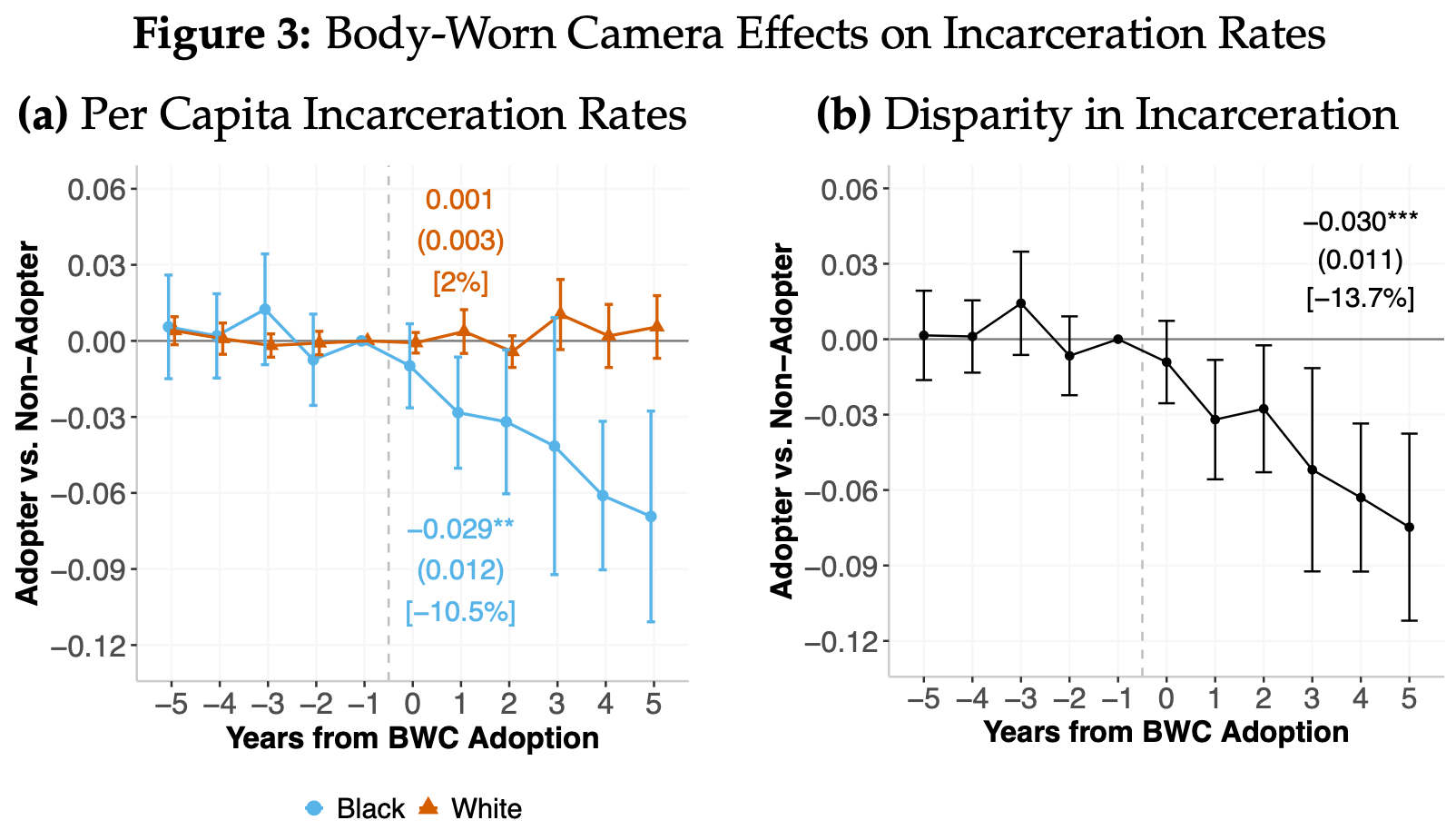
In many high-stakes settings, decision-makers rely on earlier actors for information that may be distorted by bias. What happens to these decision-makers’ beliefs and choices when they can monitor earlier actors? We study this question using the rollout of police body-worn cameras (BWCs). We find that monitoring from BWCs reduces Black incarceration rates by 10.5%, explaining about a quarter of a decade-long decline in Black incarceration. Most of this decline reflects changes in downstream decisions rather than changes in arrests. To study the role of beliefs, we fielded an original survey of 203 North Carolina prosecutors and linked it to their half-million cases. About one quarter of the monitoring effect reflects learning about information from police: prosecutors with greater BWC exposure view police as more biased and unreliable.
The Labor Market Effects of Carbon Pricing
Andreas Fuster, Gazi Kabas, Vincenzo Pezone, and Kasper Roszbach
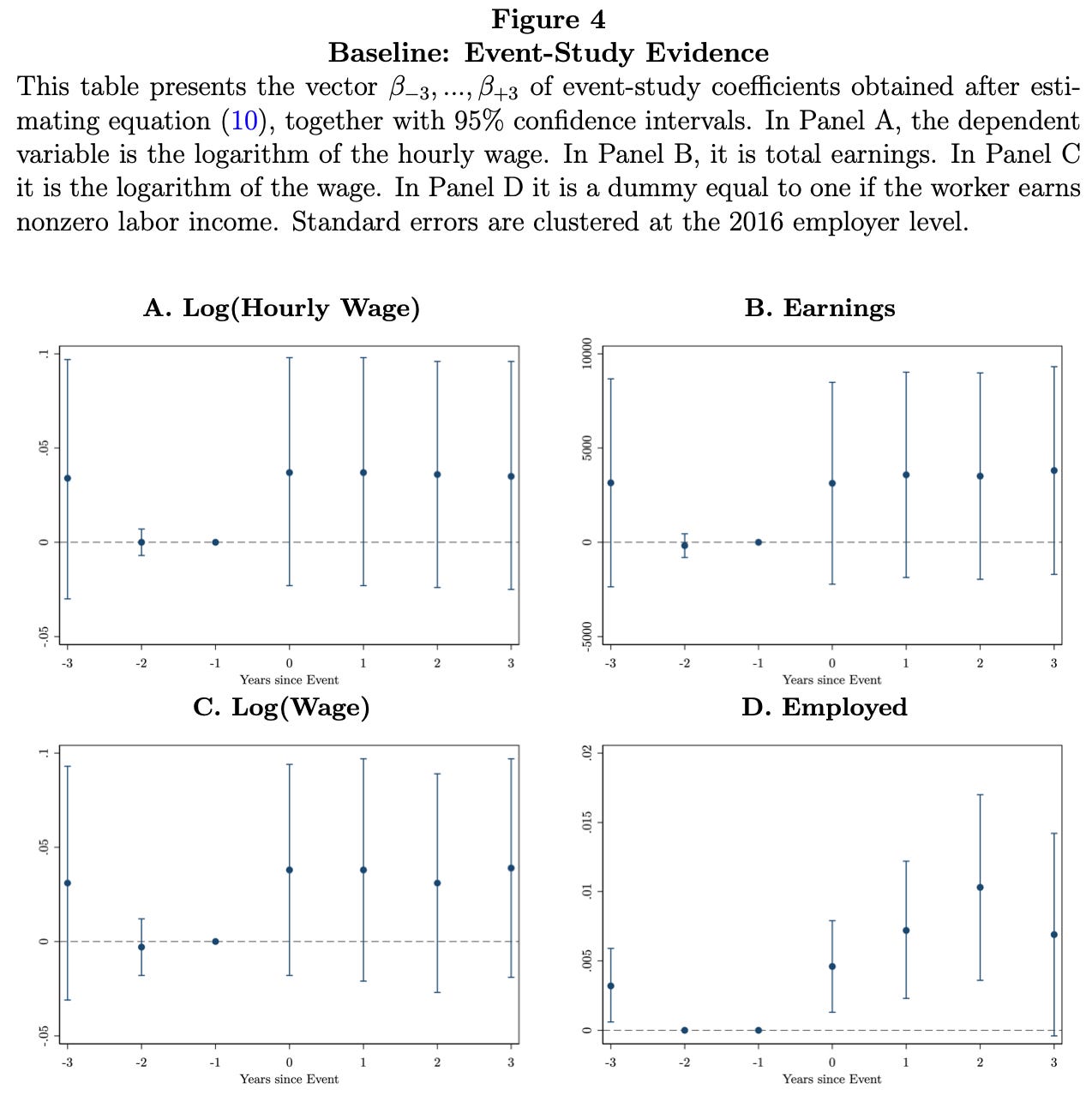
We study how carbon prices affect labor-market outcomes by exploiting a policy change in the EU Emissions Trading System that led to a sharp rise in permit prices. Using population-wide matched employer-employee data from the Netherlands and a matched difference-in-differences design, we find no adverse average effects on employment or wages. However, the distributional effects are sizable: workers initially employed by ETS firms with larger pre-reform permit shortfalls experience lower wage growth relative to their matched controls, whereas STEM-educated workers experience relative wage gains—especially those with stronger outside options. Plants with higher pre-reform shares of STEM workers subsequently reduce emissions and energy costs by more, consistent with skills facilitating the transition to low-carbon technologies. Our results illustrate that the distributional effects of carbon pricing depend on market design and worker skills.